Travels Through a Green Nation

“Choose a job you love, and you will never have to work a day in your life.”  Confucius

“He who would learn to fly one day must first learn to stand and walk and run and climb and dance;  one cannot fly into flying.”  Friedrich Nietzsche

My amanuensis, Kirk R. Brown, has scheduled some days apart from me in this winter season.  He is attending to his personal business on many fronts relating to the greening of America.  These days and in this particular season they have gatherings of our clans of fellow gardeners across this vast country of ours.  He loves what he does.  His connections are numerous and his ease on meeting strangers makes good friends of potential enemies.  He plays the fool well but does not easily suffer them.
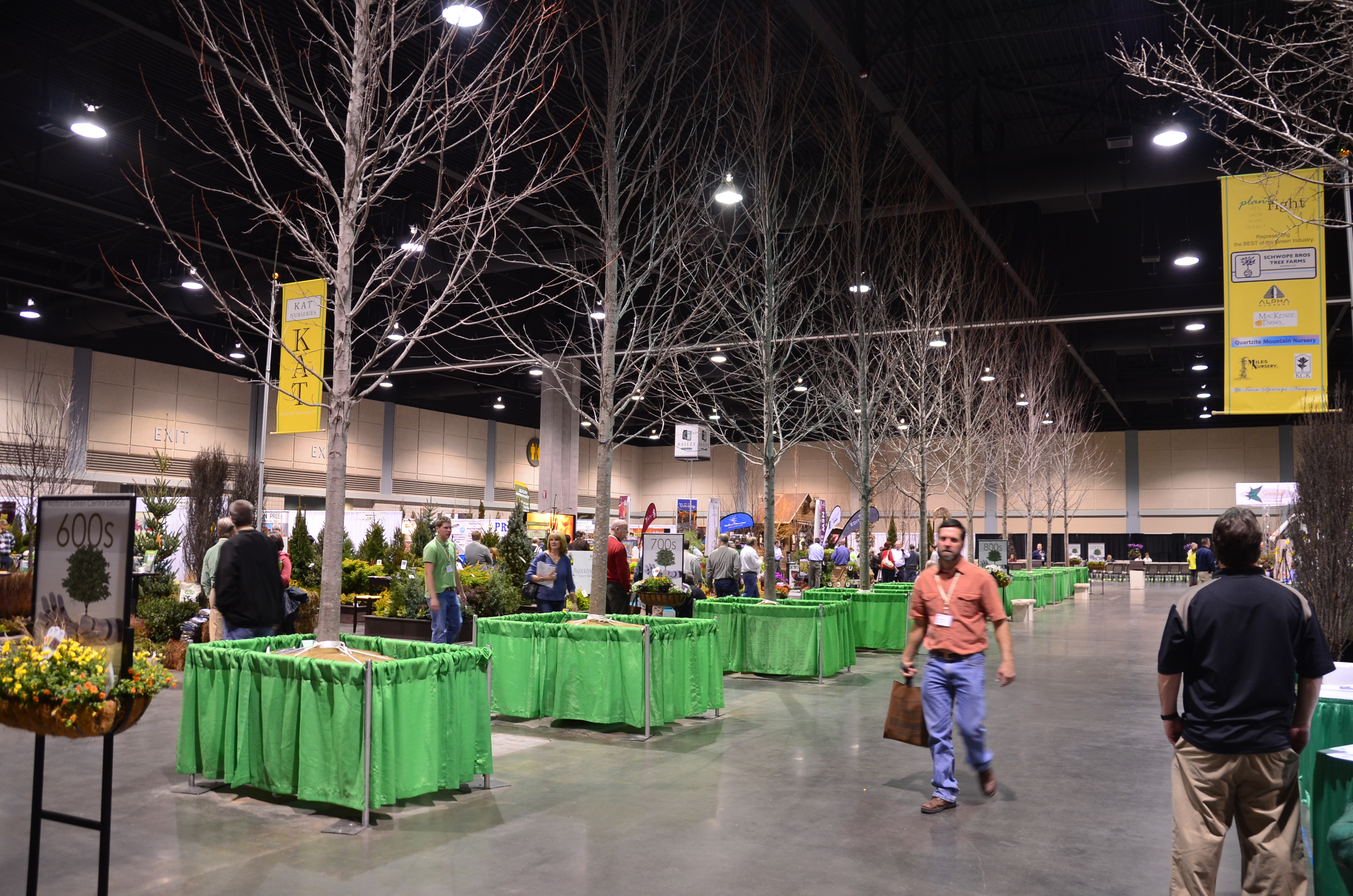
Kansas City National Green Center

This is a trade show rebranded from the original Western Nursery and Landscape Association

These clannish troupings of our tribal green color bring together all manner of possible combinations:  product endorsements, improvements, plants, equipment (a very mannish, clannish thing indeed!), educational opportunities, recognitions, reconnections, and escape from our everyday existence in an office or nursery or garden.  Kirk was farther afield last week than was in my awareness of time and space.
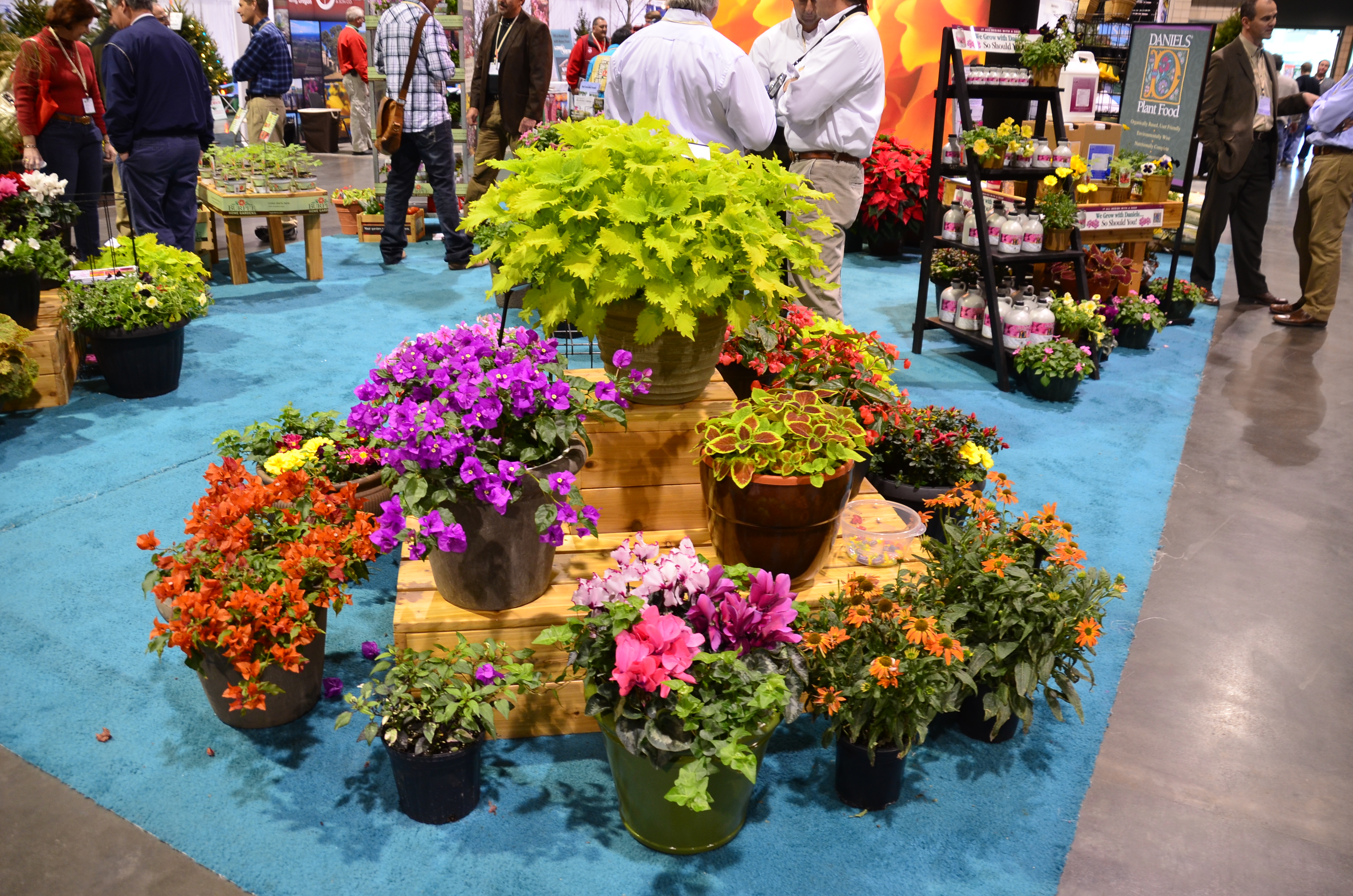
National Green Center Kansas City

Ball Horticultural put out a colorful display of their new selections

He went to Kansas:  a place over the rainbow and a left turn at the North Star.  Great, green fields awaited his arrival.  Fertile oases of alluvial ground watered by a great river in the center of our continent.  In life’s travels we pass many streams but once.  You must make special note of passing a great watershed.  Kirk retells his experience in Kansas last week as the passing of a great watershed.

Western Landscape and Nursery Association

A trade show floor is full of the products from the world of nature. Evergreen!

This clan was rebranded within a twelve-month period.  It was an ancient root out of the west.  Its lands and nurseries were abundant and strong throughout it 125 plus year history.  As with many old things, changes come sometimes planned, sometimes by choice, and most times by need.  Take my own ancient life as an example!  They needed to view life in a new way.
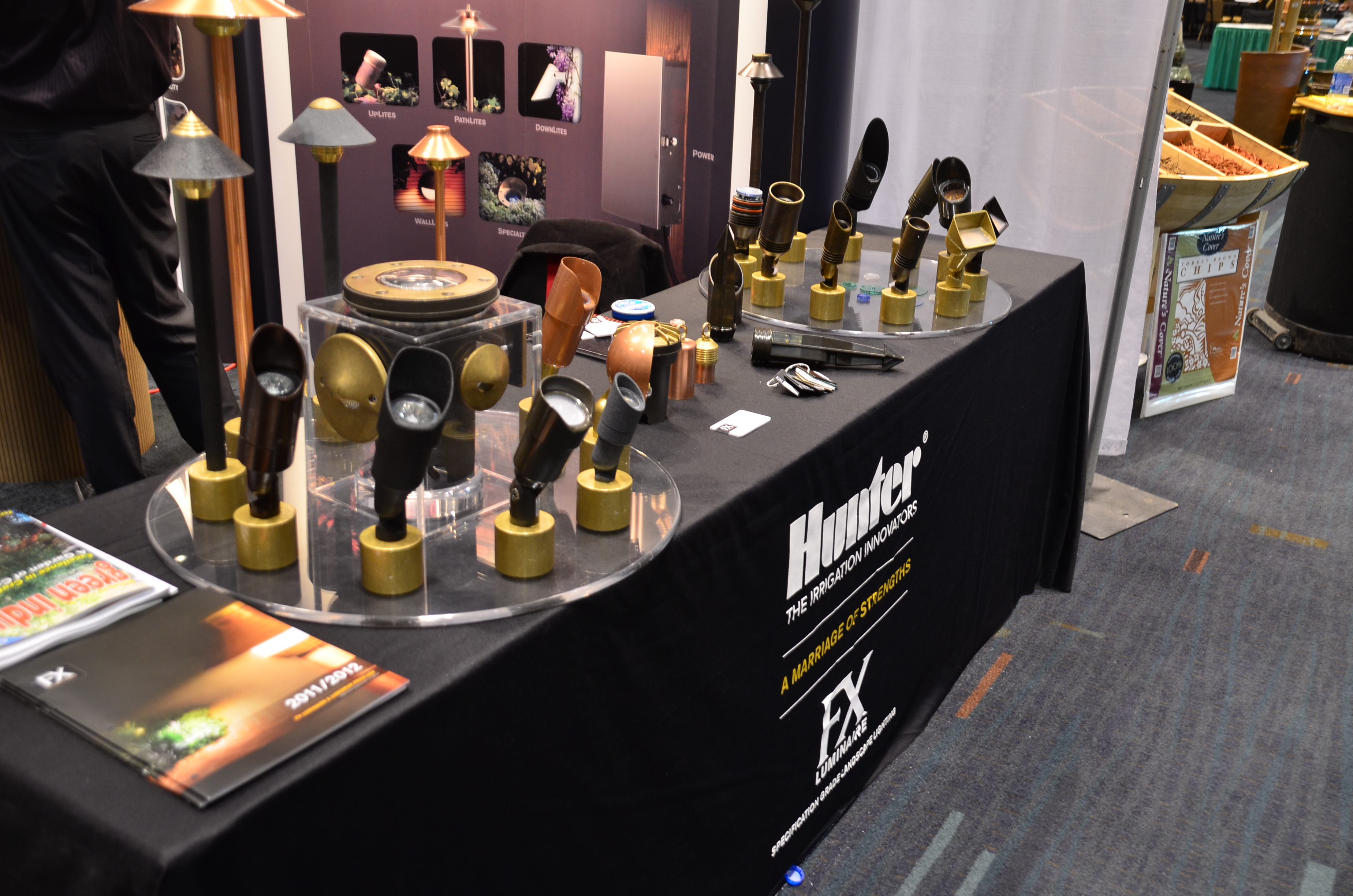
Western Nursery and Landscape Association

The latest in equipment for garden illumination. How I wish it had been available in my youth!

The new clan is known as “The National Green Center!”  Isn’t that wonderful?  What a unique concept.  They believe themselves to be the center of this country’s green movement.  Isn’t that brazen?  My Darby Meeting would hardly approve, but then we know what they felt about my outrageousness.
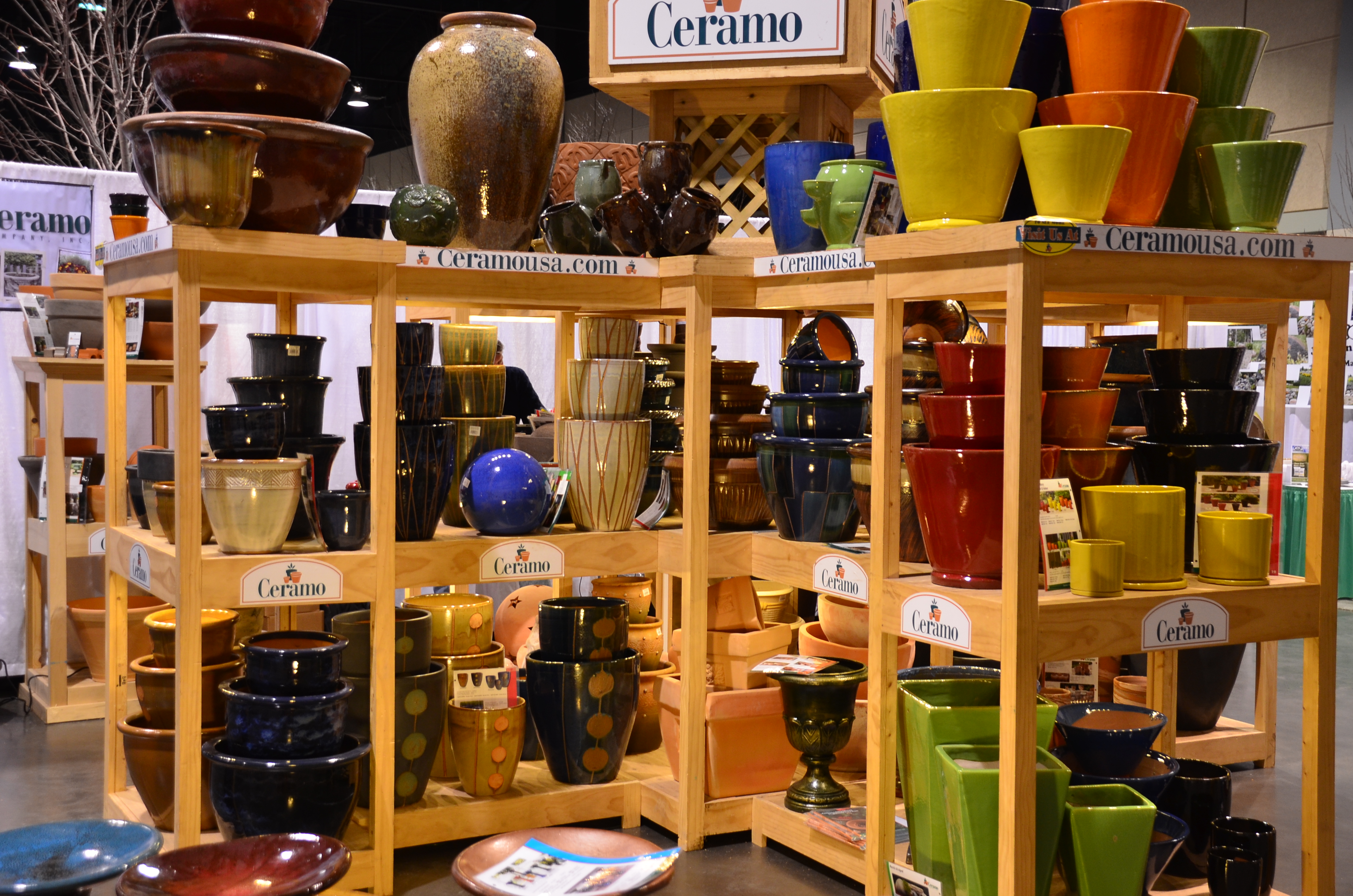
Western Nursery and Landscape Association

Color abounded in Kansas City

But this group of wise and far-sighted leaders wished to fly into a new dawn.  Realizing that they had need for wings, they first thought to dance.  The analogy fits like a clogger’s shoe.  It is hard and dynamic–dramatic almost–in its use.  They decided to first refashion the style of production:

They renamed.  They refit.  They colorized.  They developed a sense of Fashion!  They thought to enlist the help of other clans.  They recognized strangers and invited fellow travelers.  They opened the doors in preparedness for the day when the feathers would be dry and flight could be achieved.
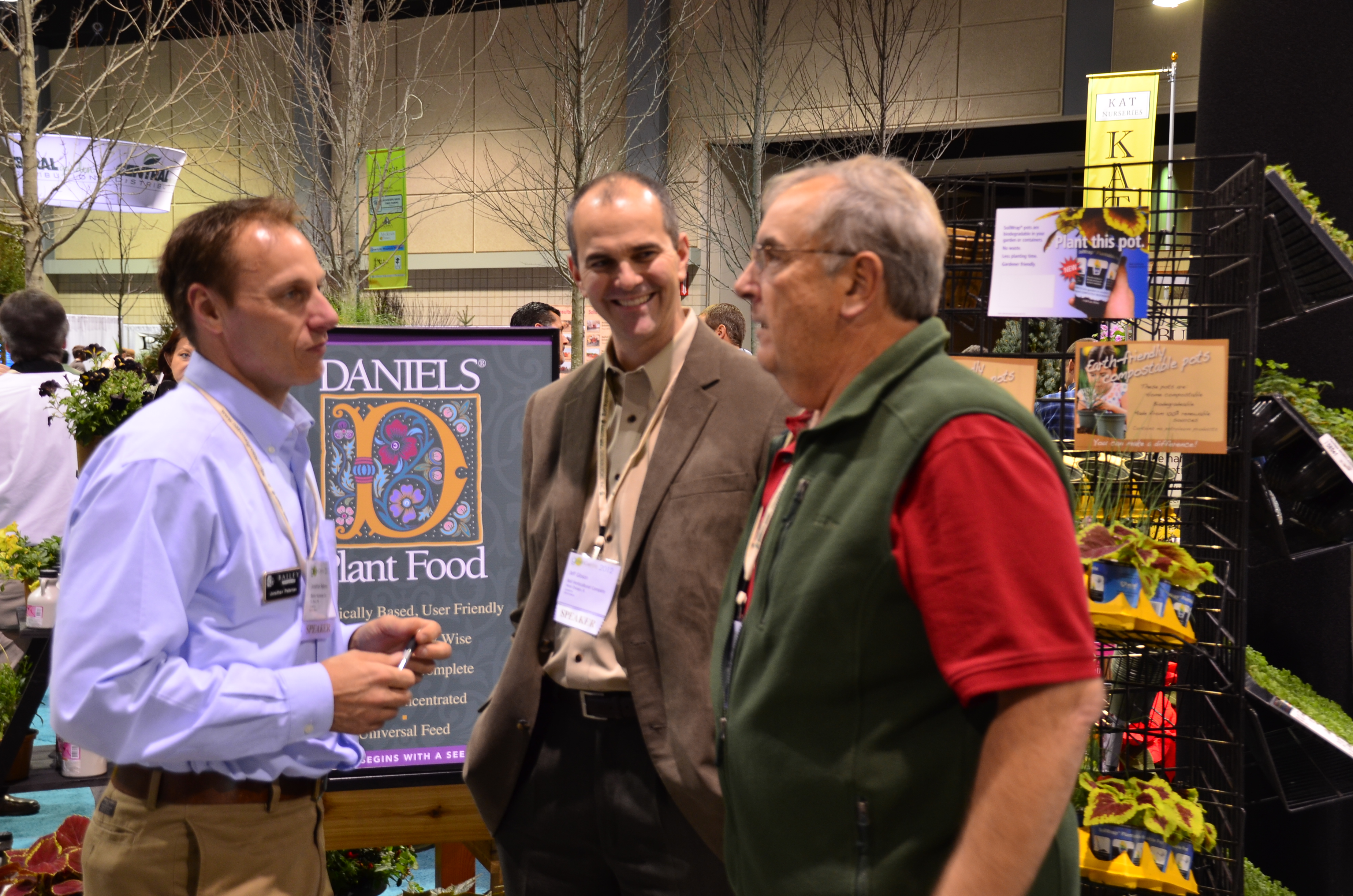
Western Nursery and Landscape Association

Networking opportunities were abundant. Michael Dirr confers with Reps from Bailey Nurseries and Ball Horticultural.

I heartily applaud the steps they’ve taken to ensure all of our collective and natural futures.  I congratulate them on their need to be sustainable:  in organization, in fiscal responsibility, and in connection.  With this green botanical nature that courses through all of us, we need to hold close and respect deeply those who choose to do battle with the angry gods of commerce and industry. 
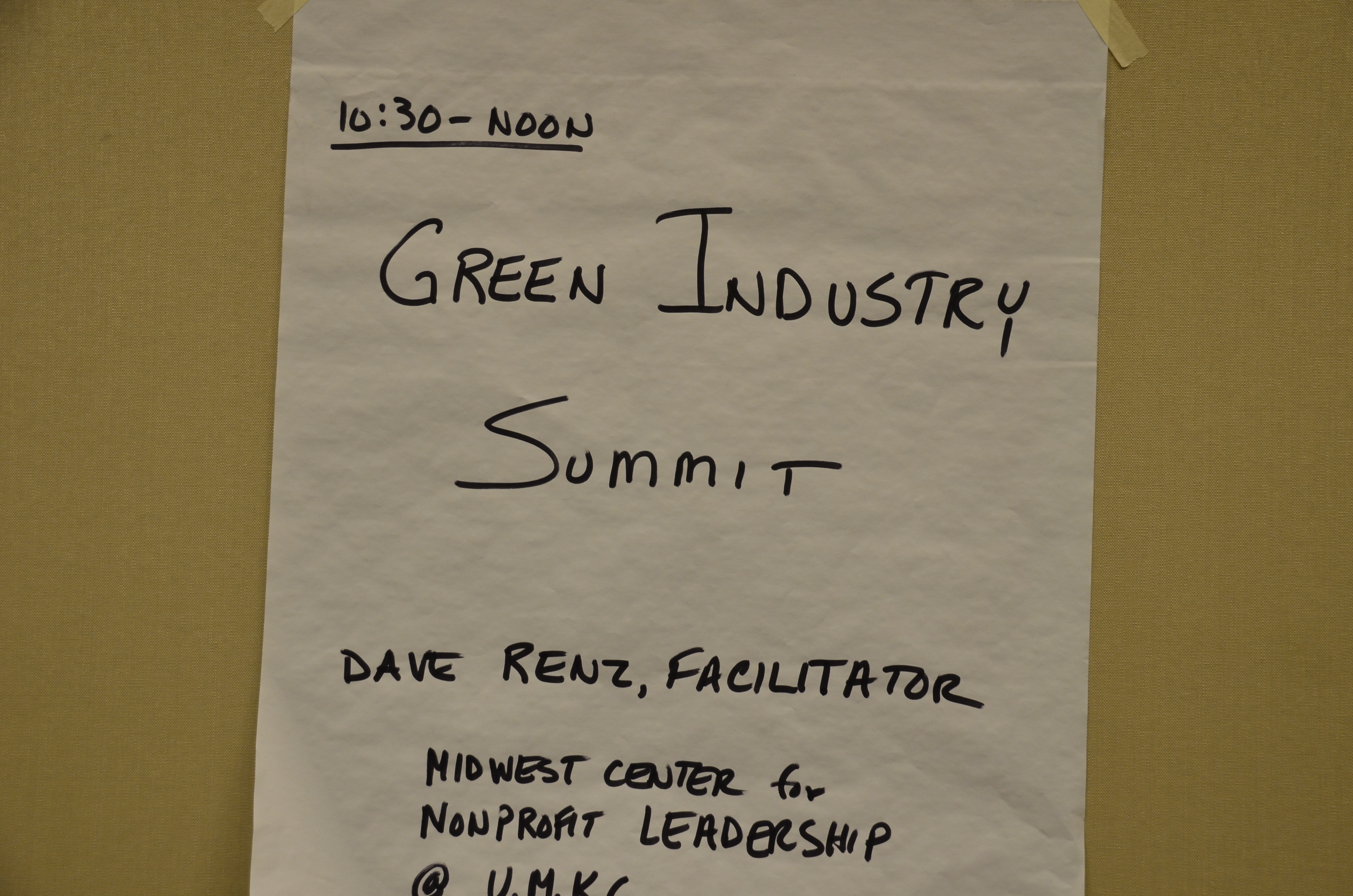
A Green Industry Summit Council

“Don’t judge each day by the harvest you reap, but by the seeds that you plant.”
Robert Louis Stevenson

“A plague [on all] your houses!”    with apologies to Mercutio from Shakespeare’s Romeo and Juliet Act 3, scene 1

My amanuensis has sent field notes back to me of a meeting of leaders in this botanical industry.  The gathering of minds had an intent to define a way through the shoals of troubled water in which we swim.  There were sharp minds at council tables. 
Two statements of purpose were attached to the gathering of horticultural tribes:

1.  Provide a venue for leaders of the industry’s organizations and associations to share insights regarding the future of the industry and the opportunities and challenges that are likely to emerge as they work to support their members and constituents.

2.  Initiate the first phase of an ongoing dialogue among these leaders to support their efforts to address and capitalize on these opportunities as they explore [what?] they may mean for the future of their organizations.

National Green Center Summit for Industry Leadership

The foolscap newsprint was a image from my youth. These elephant folio sized sheets were the same that Ben Franklin would have used in his print shop.

This was a very heady agenda.  A lot of work was initiated by the brief confederation of horticultural colonies.  It was the first trumpet call to become a United Nation of Green. 

Unlike the First and Second Continental Congresses, there were women present at the heart of this discussion.  Wisdom AND beauty.  Age and the enthusiasm of youth.  Brilliance of mind and those still dazed by the glare from the noonday sun.  And there were writers of well-turned phrases.

National Green Center

Sarah Woody Bibens was in a leadership capacity as Executive Director of the Western Landscape and Nursery Association

The reporter on site took special note of the ease with which the discussions were facilitated.  I greatly respect the scientific method and the processes in place to develop a group dynamic.  Dr. David Renz was the professor in charge.  His degree is recognized and promoted by the Midwest Center for Nonprofit Leadership, The Henry W. Bloch School of Management, University of Missouri, Kansas City.

National Green Center Industry Leadership Summit

The good Doctor was praised for his professional and efficient staging of the Association Summit.

In the world of my youth, we could have used such well-studied and eminently qualified professionals.  In my youth, I only had the wits with which I was born.  Now we can rest more easily on the taller shoulders of those who write better sentences…or possess more credentials…or speak with louder voices.

As in my day of Quaker Meetings, this group’s consensus was reached after strenuous exercise and posturing.  There was no argument.  There also was no vote.  The congressional leaders concurred to leave the observations in an unedited form.

Notes were taken, collected, and preserved.  I am told that those in attendance wanted to, “build on this session’s info and take it forward.”

The delegates to this congress were urged:  “DON’T WASTE THIS INPUT.”  In future, it might be brought out and viewed through a darkened lens.  But if it is not to be used immediately, how shall it not be wasted?

What proof can be drawn that this meeting occurred?  What sound does a falling tree make if unheard by a passerby?  When does a natural confederation cease to be a group of individuals and become an individual group?

This congress produced a set of Articles of Confederation.  Analysed in their pieces, they have a disparate and almost desperate need to grasp the roots and promote a horticultural revolution.  Again, Ben Franklin was there before us, “for if we don’t hang together, we shall–most assuredly–all hang separately…” 

Truer words were never spoken.  Or written.  We shall see if they are a call to action.

In the Bleak Midwinter…

In the Bleak Midwinter…

“In the bleak midwinter, frosty winds made moan

Earth stood hard as iron, water like a stone.”   

Christina Rossetti  1872

I welcome yet another new year.  It feels good to shed the old skin and attempt to dress with relish in the tighter-fitting garments that holiday feasting have created.  I look about my world and think of the major events that shape it.  Now is a time that reflection should transition to action.

I will tell you that a Moon Garden is one planted with specimens that bloom only in white or have foliage in grey or mottled with creamy variegation.  It is a garden to be enjoyed in the moonlight.  It is the first of my many garden rooms that I see when approaching my house in the evening.  On All Hallow’s Eve this past year, the Moon Garden, the place of my dreamy reverie, was covered with eight inches of heavy wet snow.  Everything was stressed not the least of which was the owner.  These are my children and they were suffering!

The White Garden Orefield PA 18069

The Moon Garden in a better season. The photograph was taken by a grand and glorious photographer, Karen Bussolini. She is a special friend and fellow communicator of sustainability.

Since the disappearance of that early snow and the steady decline of temperatures into our normal winter cycle, I have been impressed to see how quickly my garden has acclimated itself.  It will be restored to full vigor when it surges back into bloom next spring.  Still, because my thoughts are caught on the bare branches of deciduous trees, I wonder why nature would react so positively to such early abuse.  Why does she continue to rebound for us?
 
In this season, I am actively seeking causes of why our own non-responsive nature doesn’t rebound when confronted with the abuse we heap on the natural world surrounding us.  Do we ever notice when the world cries out for cures to many of its uncurable illnesses?  Our sicknesses range from the common cold to the end of the polar ice caps.  And I think back to those delegates in Philadelphia in the days of my youth when another cantankerous, garrulous independent named John Adams could not hold back his wrath saying, “Piddle, twiddle and resolve.  When will it be done?”

I have been too long away from Philadelphia and its more genteel society to wish any one of them ill, but this should be the season to contemplate change.  Just as John Adams was pushing for the start of a revolution, I am also inclined to encourage revolutionary action.

It is a season to review lists, pay debts, collect outstanding balances that are due, and make resolutions.  These should include attempts to redress oversights and slights, receive inconvenienced or unreconciled relatives, improve one’s personal appearance, manners, station in life, or monetary situation and above all make more time for the things that are most fulfilling.  In short, it should be a time where dreams become reality.

Many of my dreams have come to fruition.  Most often that ripeness and maturity has been at a greater cost than I ever anticipated.  The cost has been in money, lost time, friendships, and pieces of my soul.  As yet another winter is passing, I take stock of my soul and find that it has a strength which for much I my life I thought it lacked.

So it is time to move forward with renewed strength and vigor into the wilds of nature and challenge the prevailing authority with news of change.  Nature will throw off whatever blanket it finds intolerable.  When nature becomes too hot, it will rid itself of even the most clinging garments.

I am on a path of collision with those who would not seek to preserve and protect the environment.  The colors and shades of belief are fast disappearing.  The issues become black and white.  They should be as white and clear as my Moon Garden! 

White Garden John Bartram Kirk R. Brown

Narcissus bloom again in spring in the Moon Garden

Either we choose to welcome a vibrant budding spring or we shall certainly lie exposed in a permanent bleak mid winter.  My choice is to go out and see how my garden is growing!  Blessings on your house and health and prosperity to your person.

With the Saints of the Holidays: Part II Saint Nicholas

“As I drew in my head and was turning around, down the chimney Saint Nicholas came with a bound…”  Clement Clarke Moore

John Bartram Kirk R. Brown
Before there was Santa Claus, there was St. Nick. Jolly, plump, elfin.
Saint Nicholas began his saintly life in what is now a province of Turkey.  His was an age that saw sweeping changes in the geo-political world of the Roman Empire.  It was during his term as Archbishop that Constantine the Great divided the empire between capitals in Rome and Constantinople.  Nick was at the crossroads of history.
 
Perhaps it’s why history has taken such great note of him. 
 
Saint Nick John Bartram
Saint Nicholas has been transformed by time and customs.


During his life, he is given credit for being a very nice guy:

He gave dowries to three girls who would otherwise have remained husbandless.  The three bags of gold that he dropped through their window (or down their chimney!) can still be seen today as iconic symbols outside any pawn shop door. 

He resurrected three young boys out of a vat of curing spices after they’d been slaughtered by a hungry local butcher.  Our own tradition of serving ham for the holidays might have started with that pork barrel.

He was responsible for taking by deception two years supply of wheat from a ship’s cargo meant for the emperor in Constantinople.  By miraculously replacing the grain, the sailors successfully delivered the measured cargo but the starving people of Myra had not only sustenance but seeds for spring planting.  This is a reason why he has become the patron saint of sailors.

For whatever reason, this man has become the icon of gift giving in a season of darkness.  His named has become synonymous with impulse we have to give until it hurts.  People even collect images of him hoping that more will be deposited on his journey around the world on Christmas Eve.


Santa Claus John Bartram Kirk R. Brown
A shrine to Saint Nicholas


He lives in a magical world of light and eternal happiness.  His journey is one that we would all emulate.  Whether he is named St. Nick, Sinterklaas, Santa Claus, Pere Noel, or Father Chrismas, he fills the world with joy.  Let us join with his goodness this holiday and welcome in the New Year with good cheer.


John Bartram Kirk R. Brown
The world would be a bluer place without Saint Nicholas!

With the Saints of the Holidays: Part I Santa Lucia

“Sometimes our fate resembles a fruit tree in winter.  Who would think that those branches would turn green again and blossom, but we hope it, we know it!”  Johann Wolfgang von Goethe

This season is ripe with reasons for celebration.  It is the ancient passage of the sun through its winter solstice.

Muhlenberg College Santa Lucia Festival
Dr. Carolus Linnaeus celebrated the Festival of Santa Lucia in North America this year.
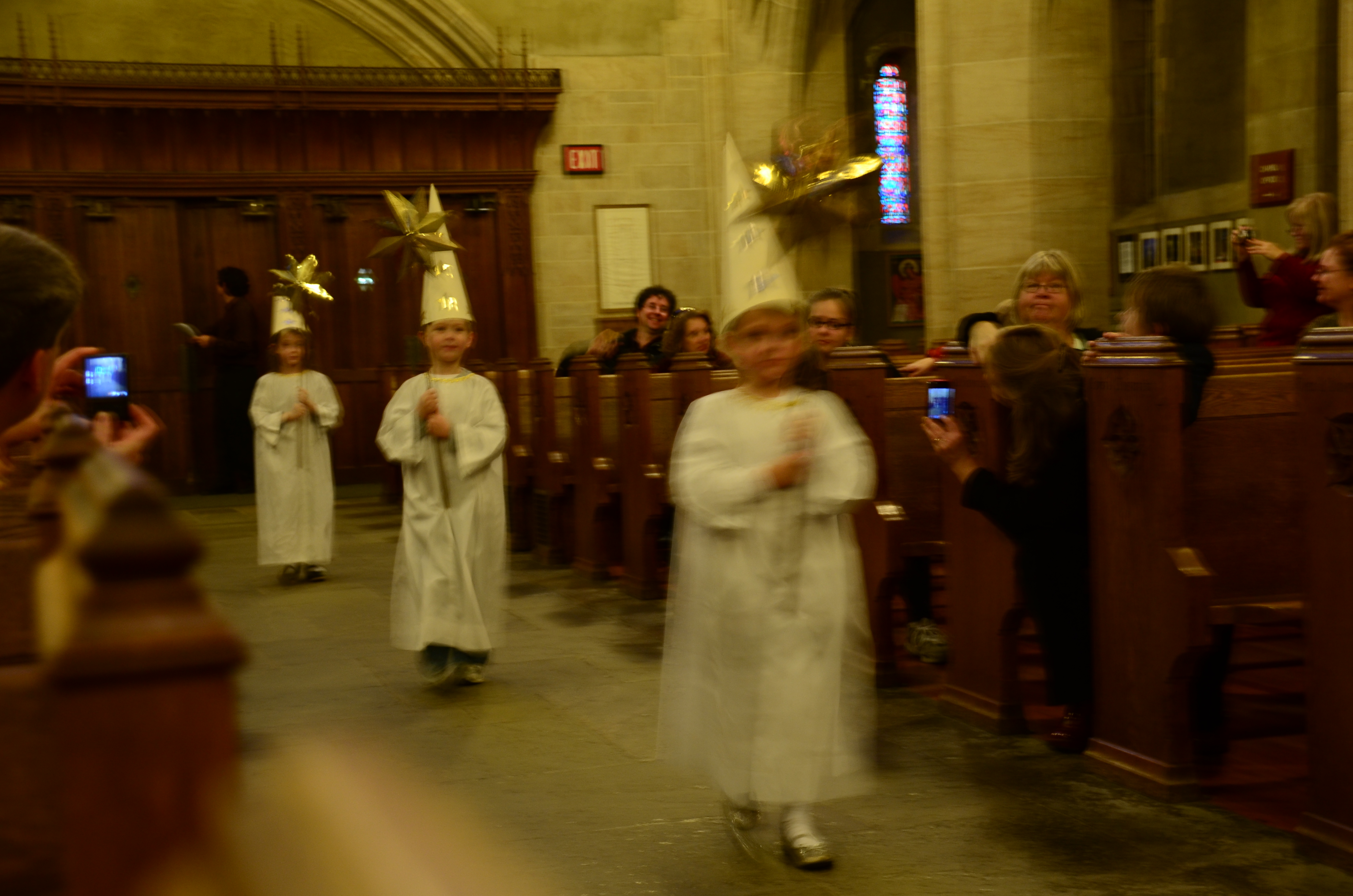
Dr. Carl Linnaeus visited the North American colonies this season at the invitation of the Viking Lodge.  That is the group who is selected by the Trustees and Faculty of Muhlenberg College to assist in the production of the annual Santa Lucia Festival service at the Egger Chapel.
 
Their members make up the choir of angelic voices while the parts in the pageant are given out to the children of faculty members.

 
John Bartram Kirk R. Brown Speaker Lecturer Horticulturist

The choir is made up of members of the Viking Lodge. The children of the Santa Lucia Festival are family of Muhlenberg College Faculty.

 
Santa Lucia (Saint Lucy) was a real person during the time when Roman Emperor Diocletian was actively engaged in the eradication of Christians.  Many apocryphal stories are woven around the legend of her torture, blinding, martyrdom, and strong faith.  Many miracles are attributed to her intercession.  Hers is also one of the few hagiographies that was transferred almost in its entirety from Roman Catholicism to Lutheran Protestantism. 
 
Saint Lucy is a favorite of the Swedes and other northern cultures.  Her story is one of bringing the light of Christianity to darker (read pagan) cultures.  Her crown of evergreen and candles combines the much earlier traditions of Norse legend with celebrations of the winter solstice and Christian piety. 
 
Her special day is recognized on our current Christian calendar by its proximity to the Winter Solstice on the old Julian date.  You’ll remember that it was Pope Gregory XIII who in 1582 corrected the drift of our annual vernal equinox by dropping 10 days out of that year and adding our celebration of Leap Year.  It’s all about the sun and worshipping its return in time for the spring planting.

Santa Lucia Carl Linnaeus

The Star Children carry lights into the darkest night during the Santa Lucia pageant

 
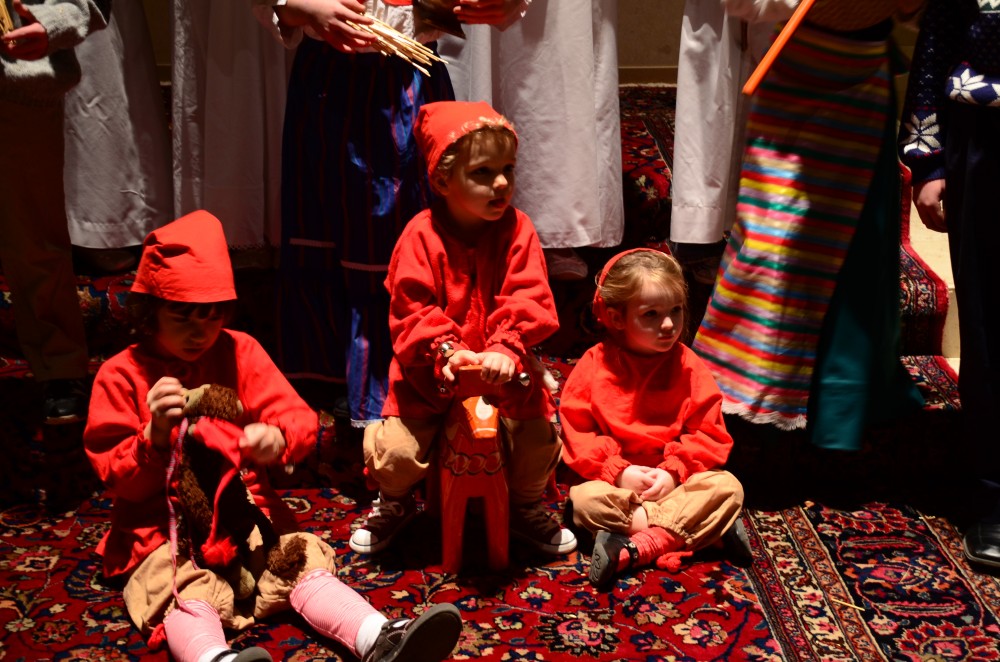
So, Lucy’s lights helped our faithful and/or pagan Swedes to know when they should gather in the sheafs, put away the pigs and cows, and watch out for the spritely Tomte.  These last are the creatures of the forest who come in-doors to taunt and tease with their tricks and trials.  They are always the cutest and most-anticipated of actors because they are portrayed by the youngest members of the family.

Tomte gremlins gnomes elves sprites

The Tomte are always the youngest children participating in the pageant


After the pageant, all assembled adjourn to a feast that includes a hot spiced toast to the ancient ways.  Glug or Glog or Glub-glub-glub.  It’s the sound that the marinated raisins and almonds make as they are swallowed whole in the partying mix.
 
Carl Linnaeus was present to lecture on this particular festival of light and the reminder it brings all of the reason for the season.

John Bartram Kirk R. Brown as Carl Linnaeus

Carl Linnaeus celebrating the Santa Lucia Festival with the Viking Lodge


On a cold winter’s night, it’s a grand way to stay warm.  A very good and toasty time was had by all!  Gut yul!

When Colonial Dames Are Neither

“I must not write a word to you about politics, because you are a woman!”  John Adams (to Abigail)

John Bartram Kirk R. Brown

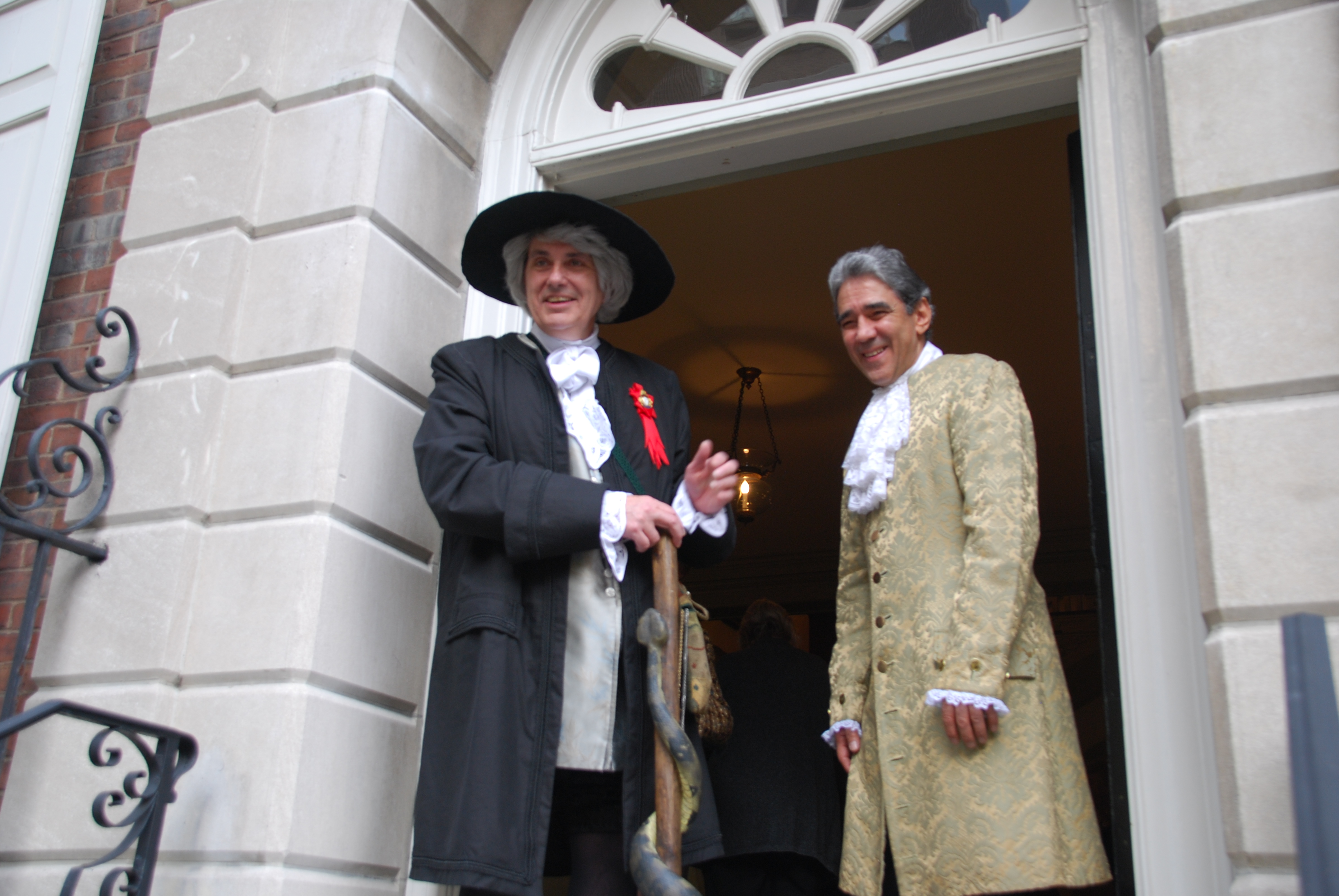
John Bartram interrupts the official duties of the Doorman of the house belonging to the National Society of Colonial Dames of America

I received a request to appear at the home of colonial dames in New York City.  What was I to think?  How should I respond with such a chasm of misinterpretation potentially drawn out before me?  Colonial dames?  Do gentlewomen easily accept such a label?  But, it would seem to present a perfect opportunity for a John of any age to appear.  So I took my heart in my hand as I responded to the contact.

“What does the group want from me?” was my opening gambit.

“Well, some of our members have heard of you and we’d like to know what you could do for us.”

My age sometimes betrays me.  I was slightly confused.  But I gamely pushed on:  “I can do much, Madam.  But who or what specifically do you wish to appear?”

“Is there anyone else you do?”  The confusion multiplied exponentially.  She was good, this woman to whom I was speaking.

Not wanting to give too much away, I hesitated and tried a round-about route:  “Many lives intersect in all of God’s creation.  Each of us play many parts and live in many ages.  I can be many different men to many audiences.”

There was an intake of breath.  I felt myself blushing.  Perhaps I had gone too far.

“Let us begin again,” I said.  “Perhaps it would be better to tell me what group you represent and why your confederation of ladies gather to become enlightened.”

That opened the flood gates of information.  I discovered that I was being asked to present a horticultural lecture to the members of The City Gardens Club of New York City.  Confusion was at an end.  Arrangements were discussed and a date was confirmed.

John Bartram Lives, Kirk R. Brown

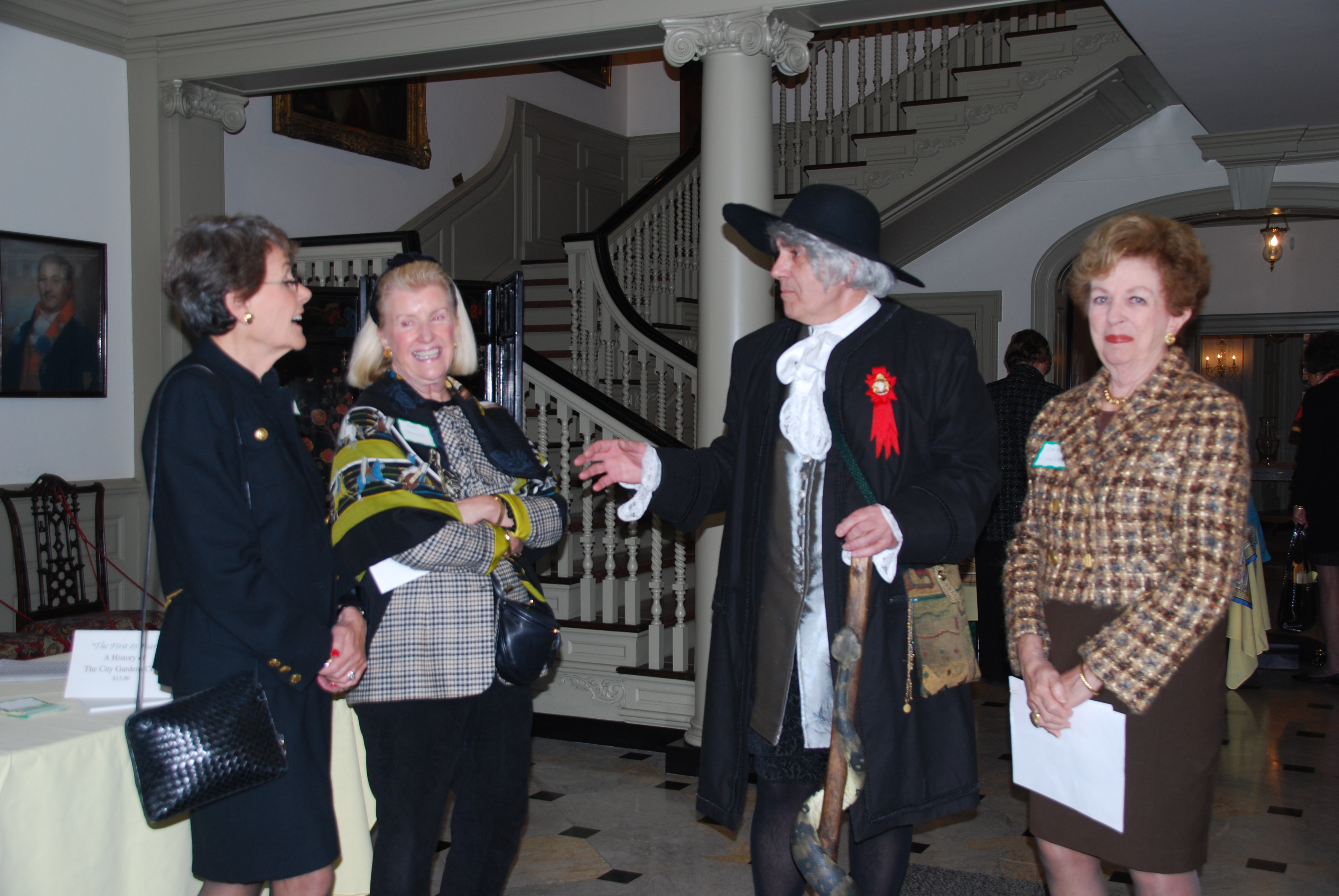
John in the gracious entry hall of the magnificent Colonial Dames when speaking with members of the City Gardens Club of the City of New York.

Unlike any of my preconceptions, the group was perfectly well-behaved and attentive.  If anything, I was more the fish out of water.  Imagine, a centuries’ old Quaker cavorting with the sophisticated horticultural doyennes of the City Gardens.  I was humbled.

I was even ushered into the event by a man of my own time and dress.  We saw eye to eye about the ease with which the world can be deceived by looks.    Time distorts even the truth of the original intention:  Colonial and Dames are not an abstraction in this marbled hall.  The ghosts of history ask us to attend to the needs of country, family and honour. 

And I am present to speak on the living world of horticulture.  It is a thread of centuries.  And I feel as though I’ve come home.

Then they served tea.  I didn’t note who poured but a great good time was had by all…

John Bartram Lives, Kirk R. Brown

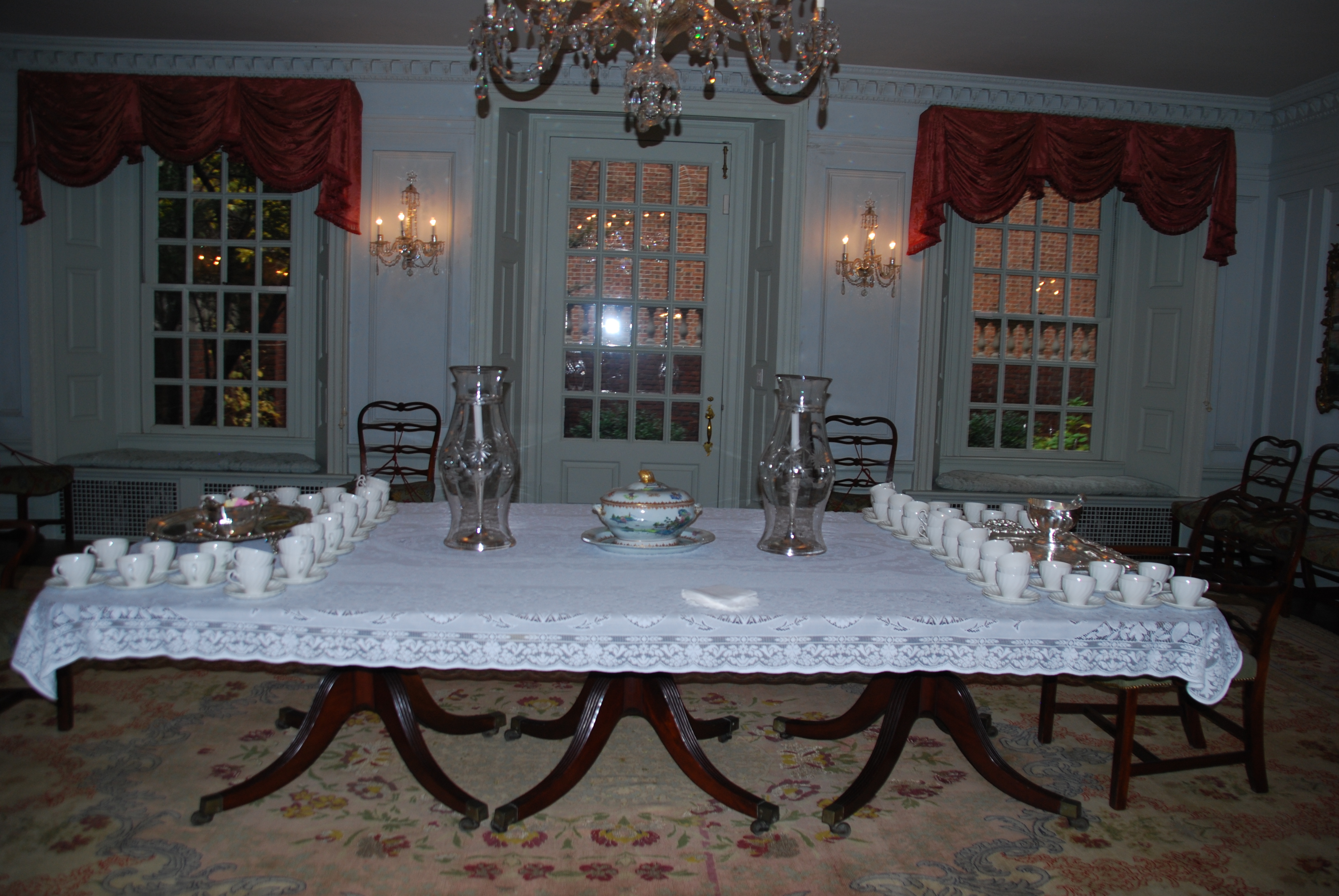
Tea was set and served after the horticultural presentation.

With the Spirits of the Holiday

“Bibamus, moriendum est.”    Seneca 

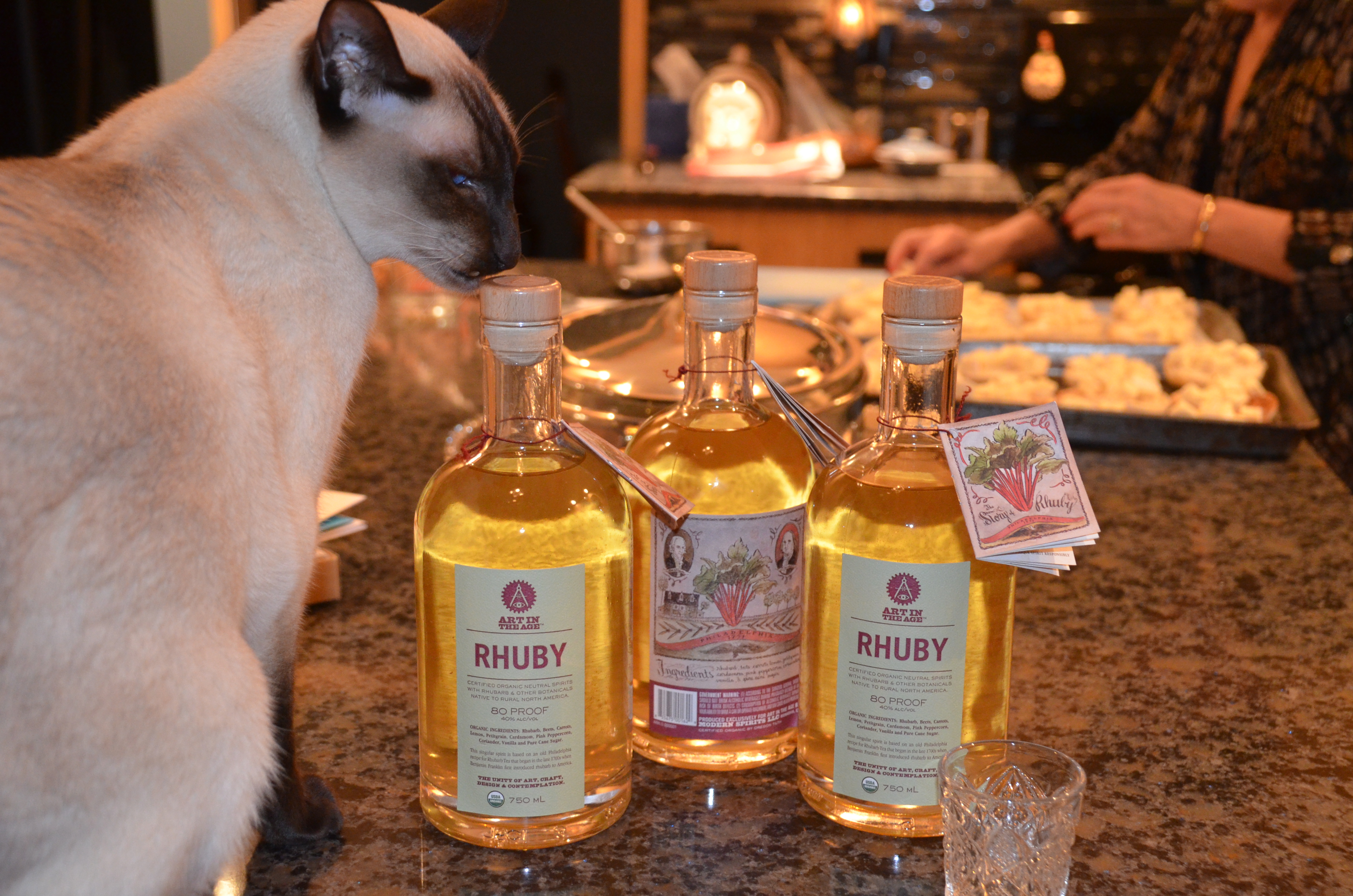
Rhuby is served in celebration of a life well lived
This would appear to be John Bartram’s Cat’s favorite spirit.

For most of my early life, religion forbade me to imbibe.  In age, I’ve turned that corner and reflect on Seneca’s wisdom:  “Let us drink, for we must die.”  Temperance and forbearance aside, there is a newly introduced liqueur crafted from some of my best intentions and surest herbs.

Benjamin Franklin sent me a case of Rhubarb roots in 1770.  I planted them and they thrived.  From my garden, it was introduced to the rest of North America.  Long esteemed for its medicinal properties, Rheum, was traded by its root only.  It was many years before people came to understand that the stalks and leaves could be used for culinary benefit also. 

I was the first to make a tea out of extractions from the leaf.  It was delicious fortified with other steeped herbs and flavoured with sugar or honey.  Now someone has taken my elixir and increased the proof of its benefit.

I take the quotes directly from the manufacturer in Philadelphia (but the photographs are my own!)

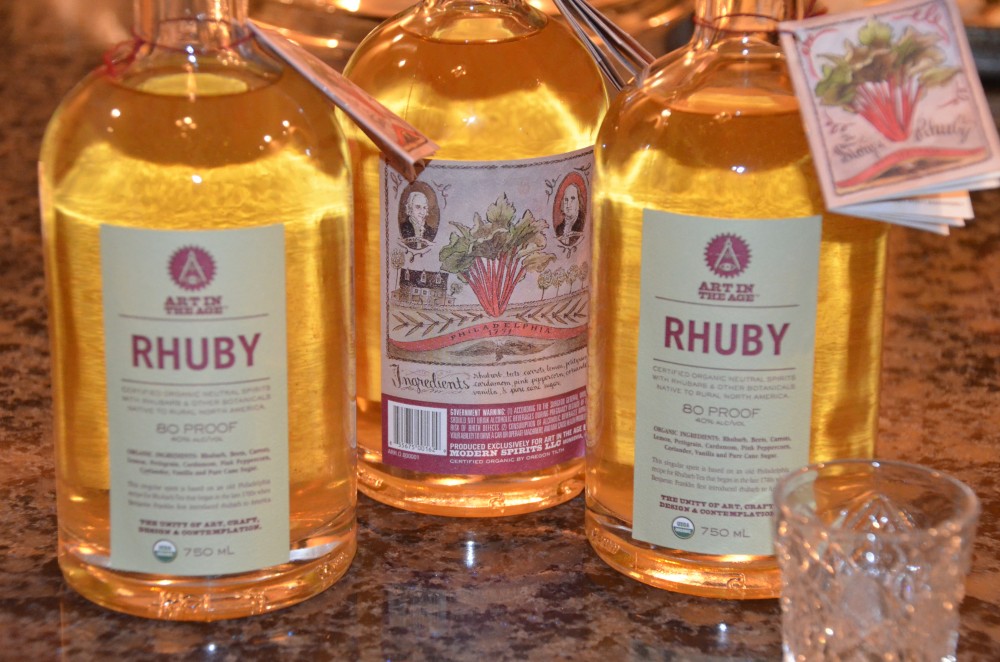
“RHUBY is based on a centuries old Pennsylvania recipe and is totally unique in the marketplace. There has never been anything like it…at least not since 1771. This is the year Ben Franklin sent John Bartram America’s first rhubarb seeds. Bartram proceeded to make a delicious garden tea with rhubarb, beets, carrots, lemon, petitgrain, cardamom, pink peppercorn, coriander, vanilla, and pure cane sugar. We took this recipe and turned it into a spirit!  There are as many ways to enjoy Rhuby as there are vegetables in a summer garden.”  http://www.artintheage.com/spirits-products/introducing-rhuby/

The producers have included a wonderful small broadside that they attach to every bottle.  It describes the connection between Franklin, Bartram and Rhubarb.  The purchaser can find my picture in the upper left hand corner of the label.  And my name under it, also!  I thank them for the notice.  Even more, I thank them for this truly enjoyable decoction.  It is noble in its originality and venerable in its history.  Even my cat has a nose for it–as demonstrated above.

At this time of year, it is especially appropriate to think about the creativity we all enjoy in celebrations.  This libation would garner untold and rapturous praise for the crafty host or hostess who served it. 

To your health and good will!

Rhuby John Bartram Kirk R. Brown

Rhuby enjoys its moment in the spotlight on John Bartram's kitchen counter


A Garden For the Trees………… Part IV: Awbury Arboretum

“A great many roots may be put in a box…under the Capt’s bed or sett in the cabin.  Nail a few small narrow laths cross it to keep the catts from scratching it.”    Peter Collinson in a letter to John Bartram 1735/36

“A box…20 inches or two feet square and 15 or 16 inches high & a foot in earth to be enough.”  Peter Collinson to J.B. 1735/36.  From which dimensions can be deduced the average size of the space underneath the ship’s Captain’s pillow.

Construction of a sea chest sturdy enough to withstand the weather of the North Atlantic crossing.
Without knowing how much it would impact my life, I began a correspondence with Peter Collinson.  He was a cloth merchant, a draper, who was also passionate about botanical science.  He became much more than my English friend.  He was at times mentor, contractor, intermediary, treasurer, benefactor, and Quaker.  Once begun, the correspondence led to a trade in actual botanical specimens and later to business in nursery production.  The first of its kind in North America.
 
The English could not get enough of the material that was free for the taking on my travels north, south, east and west.  Wherever I went, there was an abundance of material to be collected, catalogued, transported, and grown.  The shipments became regularized into “Bartram’s Boxes.”  A Five Guinea Box was delivered to the subscriber with a guarantee that it contained 100 different species of plants:  roots, cuttings, switches, corms, bulbs, slips, or seeds.  With as many as 1000 total bits of plant material to the carton.  At the greatest, we shipped 32 boxes.  That’s 32,000 plants. 
 
It wasn’t easy!
 
And the success of the venture was, by and large, dependent on the grace and good favor of the captain of the vessel that carried the crates.  It was a rough trade with a lot of vagary about it.  It could take months or in some cases years for the assignee to receive the shipment.  Sometimes–actually in more cases than I care to consider–the shipments didn’t arrive at all.
 
War.  Storms.  Theft.  Destruction by vermin, cats, crew, or passengers.  Ruination by salt water.  Baked in torrid calms or frozen in icy winters.  Captured by French Men-of-War in an unending series of conflicts and clashes.
 
The elements that conspired against the success of our venture were many and maniacal in their insidiousness.  But we persevered and ultimately triumphed. 

John Bartram in the Cope House

John Bartram welcomes all of the captains in the Cope House

A ship’s Captain was always welcome at our table and in a spare bed.  Kindness to him was always repaid with a better berth for the plants we were trusting to his traffic over the seas.   My wife was constantly encouraged to give them hospitality in my absence.  They were the partners in our endeavor who could most quickly ruin the merchandise. 

They could literally “sink our ship!”  

The Cope’s were another Quaker family in Philadelphia.  Their trade was in trade.  They owned and operated one of the most successful shipping enterprises out of the docks.  Their packets were some of the fastest and sleekest to be found in the world of their time.  And with the thriving of their business our trade was enriched.
 
Bartram’s plants were responsible for reforesting the entirety of Southern England.  It had been denuded after the great harvest of trees that built the wooden wall to defend the Island against the Spanish Armada.  My shipments went directly into the ground of some of the finest country homes and aristocratic landscapes of the English supremacy.
 
And money flowed both ways across the Atlantic.  Fortunes were made in the trade that included the horrors of slavery as two legs of the shipping triangle.

John Bartram Kirk R. Brown

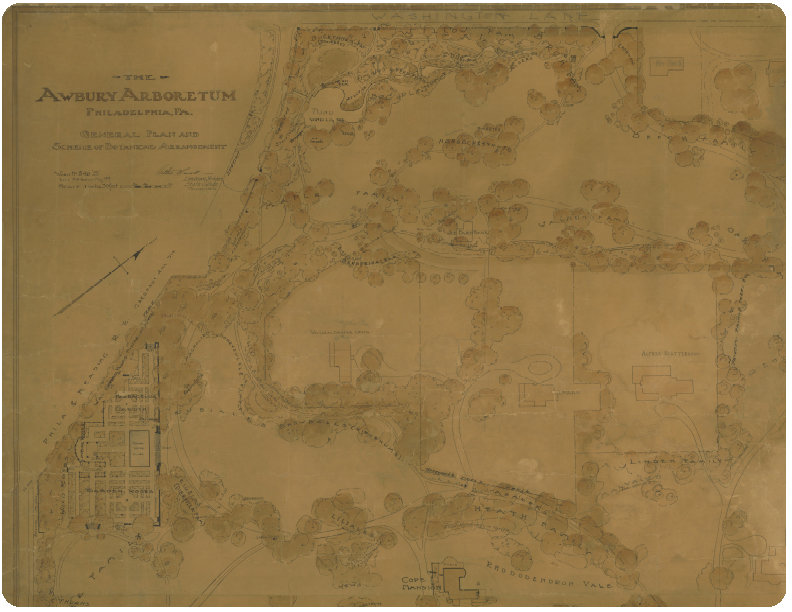
Ground plan for the creation of the Cope family compound that was to become Awbury Arboretum

 
With their success in shipping, the Cope’s purchased acreage west of the city.  Germantown in the early days was a very rural and pastoral setting.  The Cope property became their haven and summer refuge against the formal heat of the city house.
 
Germantown PA John Bartram Kirk R. Brown
The original Cope house at the heart of the Awbury Arboretum

First, one summer-house was constructed on a knoll at the high point of the land.  Then, it was joined by the construction of additional houses for dependent generations of the original family.  Sons, daughters, grandchildren, spouses, in-laws and cousins.  It became a family compound.  And then it was gathered up and preserved with an endowed trust for nature.

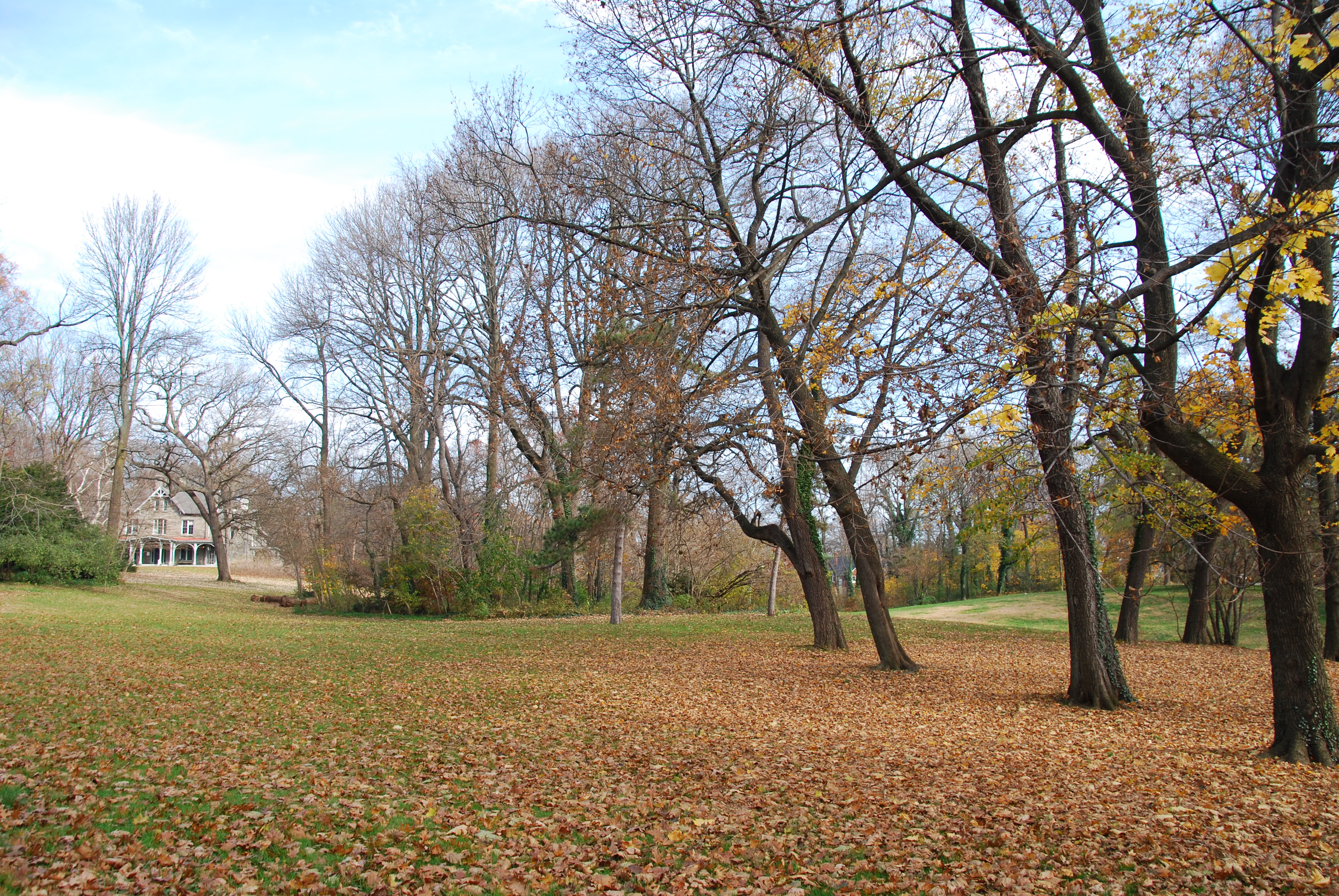
The Cope summer property became Awbury Arboretum.  It was a sanctuary for grand trees and memories of another world in a gentler age.  The landscape was designed in the English Country manner.  In other words, in the style of an English Country Manor.  http://www.awbury.org/
 
It was the style then in vogue.  That vogue was established by the export/import of my trees and shrubs to a list of subscribers setting new standards for landscaping the South of England. 
 
Let me clarify my point:
 
Awbury Arboretum John Bartram Kirk R. Brown
The Cope house in the English-style landscape of the Awbury Arboretum
 
John Bartram traveled throughout North America to discover and identify North American native flora.  I exported it to England where the novelty of the plants becomes the rage of an age.  This new 18th Century trade in luxury goods from our wildlands is used to decorate the landscapes of the English countryside.  The new style is identified with the English Aristocracy and is exported back to the colonies to be copied as if our “betters” were allowing us the use of an exotic gift.
 
John Bartram Kirk R. Brown Awbury Arboretum

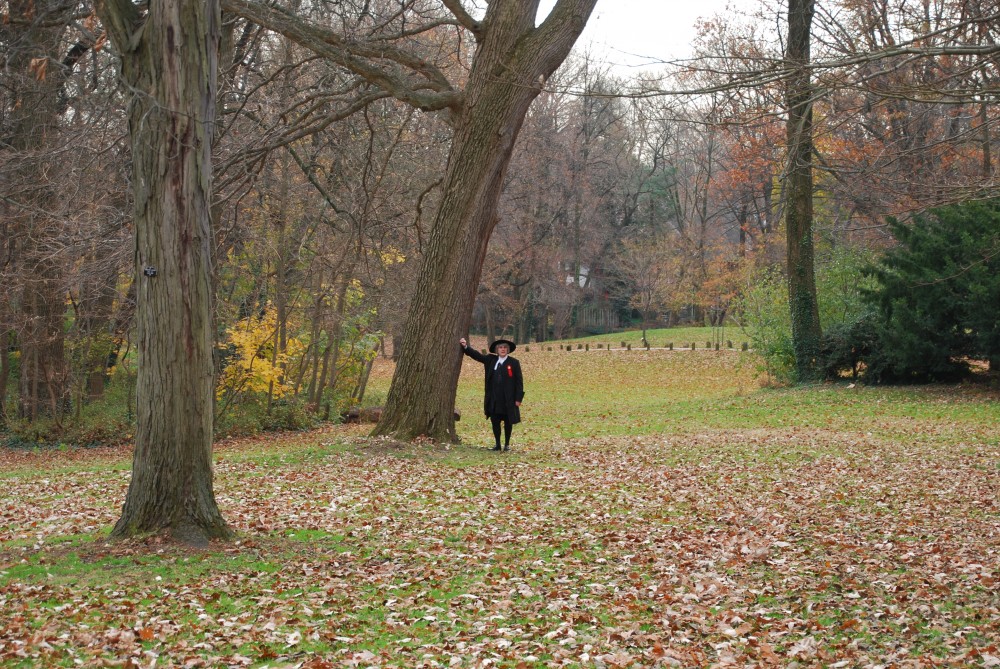
John Bartram stands at a focal point in an English-style landscape at Awbury Arboretum. It is the closest that he's gotten to the actual thing.


In other words, MY plants came back to us identified only as select parts of an “English Country Landscape.”  Somewhere, God is laughing.  At the time, my family just continued to sell the same trees.  They just didn’t have to ship them as far.


A Garden For the Trees…………. Part III: Medford Leas Arboretum

“I and most of my son Billy’s relations are concerned that he never writes…”     John Bartram to his brother, William about John’s son William in a letter dated December 27, 1761.

Medford Leas New Jersey John Bartram
John Bartram is pictured with his great-grandson times seven removed John David Bartram.  There are two more generations of John that follow him throughout my patrimony.  This is a unique view into four generations with some of my numerous descendants.
 
For a long time, I have forgiven Billy for the many shortcomings with which I took exception to his life during my days with him.  We could not reach consensus on a number of his major personal choices.  His failure to write to his mother while on his plantationing experiment in Florida came as no surprise to me.  But it caused her extreme anguish and mental distress.  I am happy to say that subsequent generations of my descendants have not been so unfilial or inconsiderate. 
 
I have had the pleasure of speaking to several groups in the midst of which I recognized my direct great-grandson, J. David Bartram.  On my last visit to Medford Leas, he even served as the specialist in charge of my acoustic, visual and electrical media needs.  He is a spirit of my own making.  He defines the future and takes responsibility for it! 
 
J. David Bartram lives under the banner of the natural preserve in which he now resides:  Medford Leas.  The “J.” stands for John because his father was similarly named.  There was the chance for confusion, so the family adopted what had been given as his middle as the name for his recognition.  With his permission, I quote from the description of his parcel of land:
 
“Situated on the edge of the Pine Barrens, the Barton Arboretum and Nature Preserve of Medford Leas is a unique blend of accessible public gardens, collections, and preserved natural areas set amidst private residential space. Spanning more than 200 acres with campuses in Medford and Lumberton, NJ, the Arboretum offers visitors a diverse horticultural array of designed gardens, landscaped grounds, meadows, natural woodlands and wetlands, and one of the most extensive plant collections — including natives — in all of southern New Jersey.
 
The Arboretum’s mission is to promote the appreciation and knowledge of horticulture and to emphasize the importance of integrating nature into people’s living, working and recreational environments. Further, the Arboretum strives to be a model for good land stewardship by achieving greater ecological responsibility through bio-diverse and sustainable practices.”    http://www.medfordleas.org/
 
With David caring for the technical needs on my last visit, I spoke to the members of the Pinelands Garden Club with visitors attending their annual luncheon from the Haddonfield and Moorestown Garden Clubs.

Pinelands Garden Club Medford Leas New Jersey John Bartram Kirk R. Brown

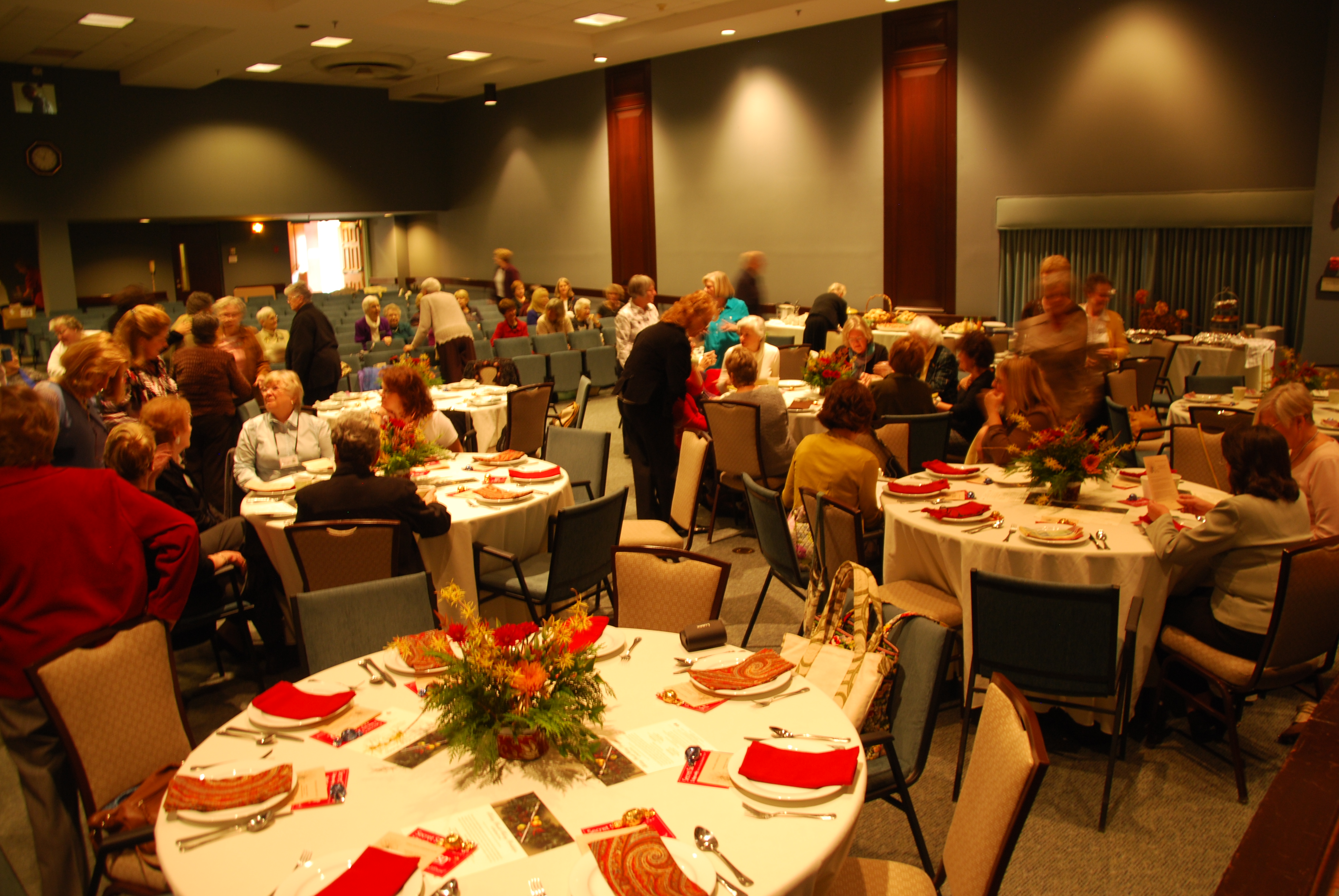
A large group was gathering as J. David Bartram help John set up his presentation for the day's entertainment.

 I am constantly amazed at the ease with which I am welcomed into any group.  This day was an especially notable opportunity.  It is with some hesitation that I take on the weight of performing in front of good friends let alone members of my immediate family.
 
I always question my abilities under such circumstances.  I have what I think is called “stage fright!”  But for this case, in particular, I thought of life’s great circle.  How rare it is when we can see such a span of life and connection and history all in one place.  How amazing it is to me that after all of these years, one of my heirs has chosen to reside in an arboretum.  He has put aside some amount of personal convenience and elected to live with the trees.
 
So to the old question:  Which came first, the chicken or the egg?  I have to inquire whether my penchant for Botany is something internal to my  being.  Is this “natural seed” something that can be passed on through the generations?  Did I give David his passion for the Horticultural world?  Or, is this need to live in and with nature a reflection of God’s true nature?
 
In either case, if there is such a thing, can this seed be transplanted into the lives of others who care less or not at all about preserving God’s nature?  That has become an adjunct search to the main premise of my travels.  I am looking for the “seed” that will give others the spark to preserve and protect.  Our society must evolve and perhaps if we can find the way to transplant this seed we can all change that much the quicker.
 
We shall grow with time and need.  Let us pass the seeds of our own sustainability.  That is a hope for the children of my grandson’s grandson times seven.  It could be such a wonderful world!


A Garden For the Trees……… Part II: Jenkins Arboretum

“The greatest service which can be rendered any country is to add an useful plant to its culture…”
– Thomas Jefferson, Memorandum of Services to My Country, after 2 September 1800.

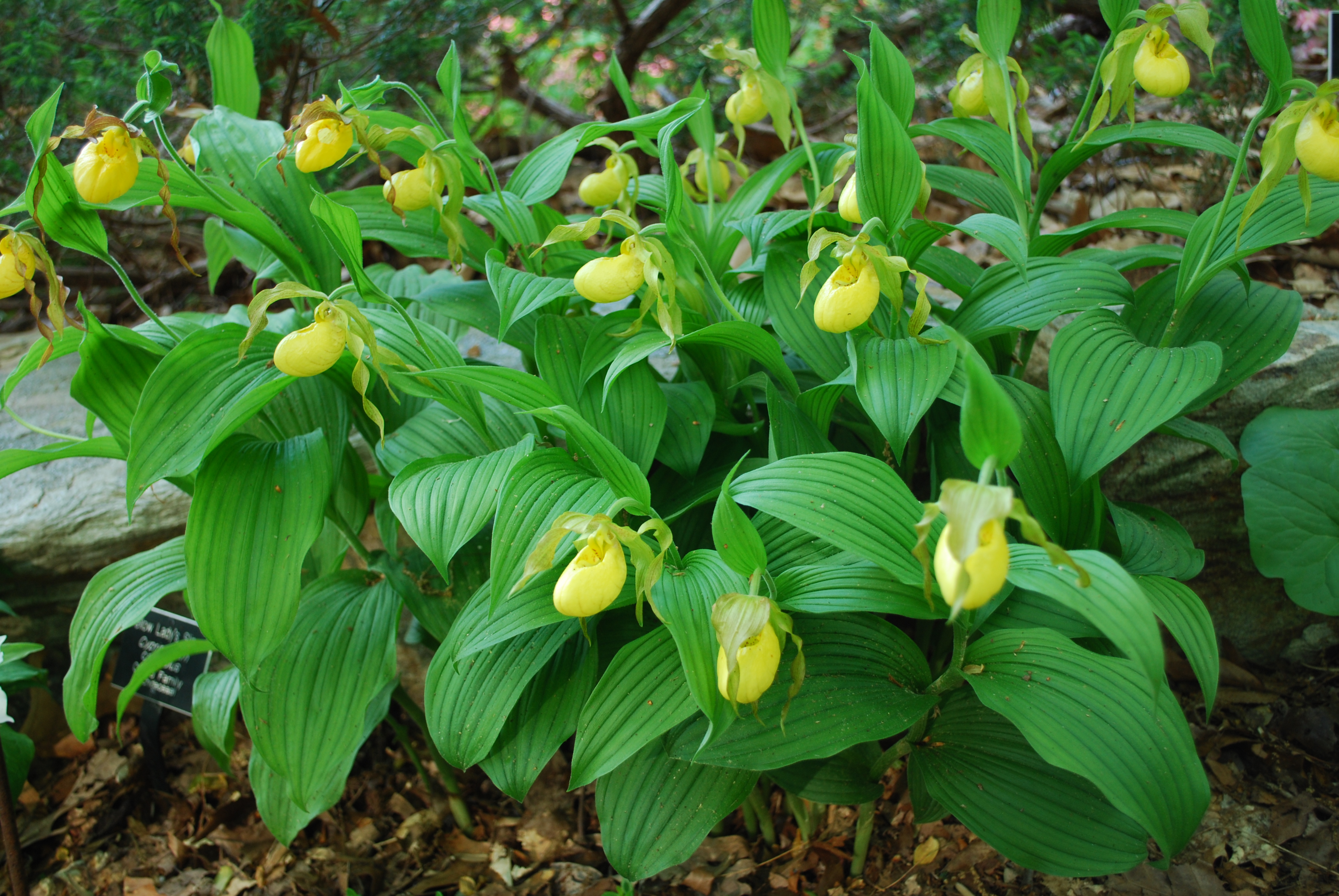
Cypripedium spp. (Lady-Slipper Orchid) is our native North American species. It can be found throughout the northeast on the floor of the forest.

I have added more than 200 plants to the international horticultural inventory.  Although it is wrong for me to state it, I am proud of this accomplishment.  That sense of pride has certainly come at great cost with little chance of repayment.  I have spent months of my life in inconvenient travel through miles of forest trails climbing countless trees and mountains in search of unique and wondrous new species.

My pride is one of the seven deadly sins.  But I consider this transgression less than many that my fellow men easily commit without thinking.

Jenkins Arboretum John Bartram Kirk R. Brown

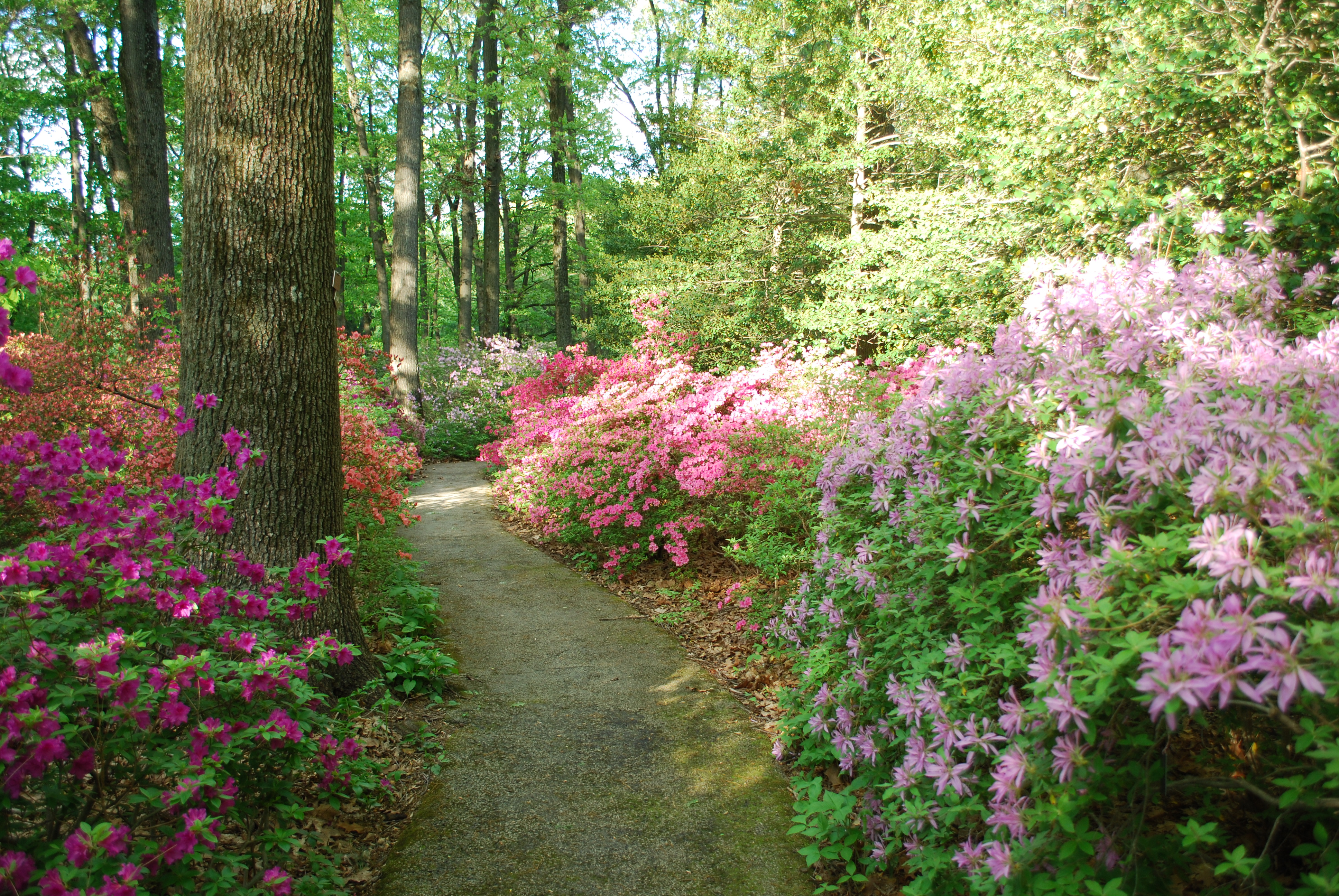
A path along the small-leaf laurel border at Jenkins Arboretum

Nowhere has the pride of my inventory of plant material been more favorably showcased than Jenkins Arboretum!  It is a natural gem in my horticultural crown.  I have been there in many seasons and I will continue to return because there is always some fresh delight waiting to attract my eye.  If there were to be a better designed heaven-on-earth I would not recognize it as greater than this:  http://www.jenkinsarboretum.org/

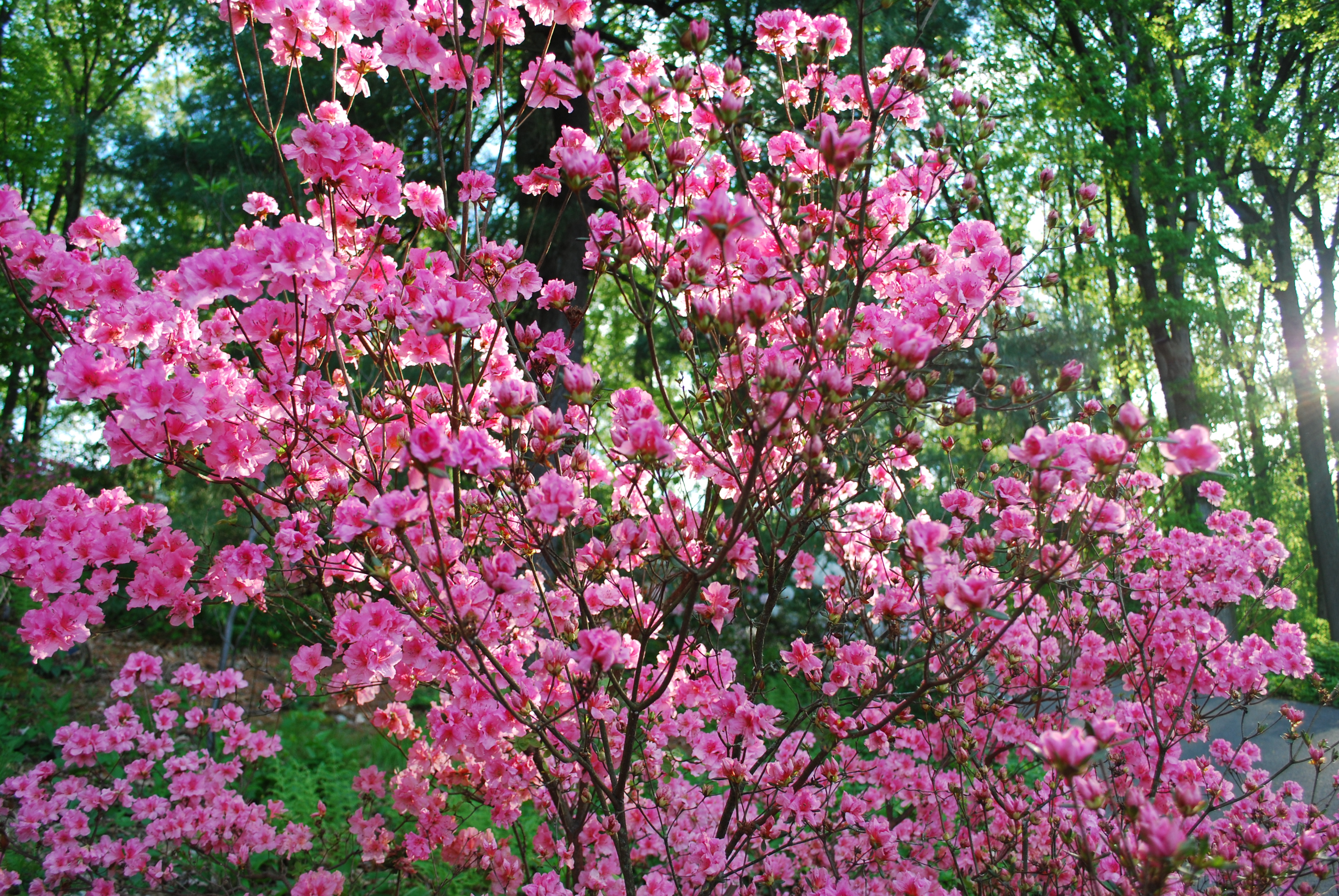
Azalea Jenkins Arboretum Philadelphia PA

The sun sets on a small leaf laurel. One of the my personal favorites.

  Although it has a number of magnificent specimens of many trees of my introduction, Jenkins has a large collection of small-leaved laurels and other relatives of the family that has come to be called Rhododendrons.  Jenkins has plants of the genus Kalmia.  And let me say that Peter Kalm, then and since, was a common thief and user.  He took food at my table!  He was sent to my garden by Carl Linnaeus to plunder my treasures, steal my secrets, and accept all of the “free” plants he could stuff into his valise.  He spent three years in North America “discovering” its many horticultural wonders.  He returned in triumph as the founder of dozens of unrecognized and unknown species.  Carl named Kalmia after HIM.  Not me!  It was an astounding rebuke to all of my hard-won knowledge and hard-earned collection of unique plants.  Peter Kalm’s collecting triumphs came mostly by digging them out of my front yard!  Just imagine the supreme audacity of the man! 

When I think of how I treated him as a second son, the wrath builds up within me.  I am at such odds with this person who stooped so low as to willfully accept my hospitality while at the same instant was considering how many of my other children he would steal from under my nose.  There was a time when the wrath of God would not have been equal to my fury.

Wrath.  It is but another deadly sin!  So, I fought against it and overcame it.  And through discussion and prayer with my wife, Anne, the feelings gradually faded.  I am whole again.

Jenkins Arboretum Philadelphia garden John Bartram Kirk Brown

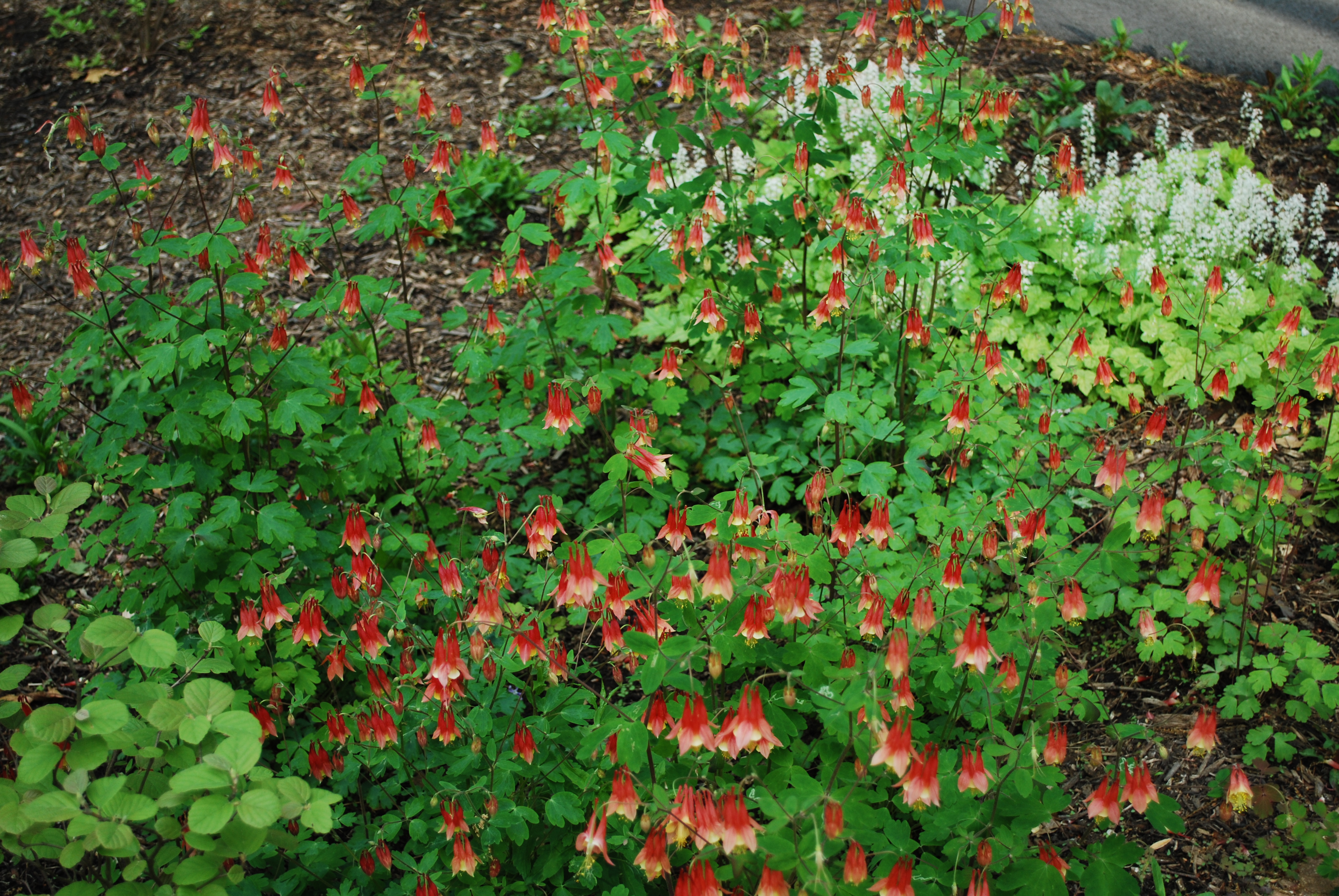
Forest floor filled with ephemeral spring blossoms of Aquilegia canadense and Tiarella

On a quieter note, Jenkins Arboretum has a dusting of spring ephemerals sparkling on the floor of the forest in April and May:  Mertensia virginica , Tiarella, Trillium, Aquilegia canadensis.  Everywhere one looks there is a reminder that spring blooms eternally.  Spring is a celebration of rebirth and abundance.  Glorious.  The term ephemeral carries with it a meaning that may be a self-fulfilling prophecy.  In man’s haste to clear and root and build and expand, these spring ephemeral plants are threatened with extinction.  Because they disappear during the heat of summer, they many times escape our memory.  In my travels, I always remember where they’ve been.  But many times, once I’ve noted them and wished to collect their seeds in the following season, I’ve returned to find the colony gone without a trace.  They can disappear at our passing.

The Cypripedium or Lady-Slipper Orchid is one more of these delightful spring ephermerals.  It is a true native of North America.  You might remember that within every box of plants that I shipped overseas, I included a root of our native Lady Slipper Orchid.  It was a trademark.  And a challenge.  I dared the English aristocracy to make such a spring as ours that would allow them to bloom.  It took years and the creation of an industry of glass-house manufacture until Peter Collinson was able to duplicate the perfect combination of nature’s cycle.

Jenkins Arboretum

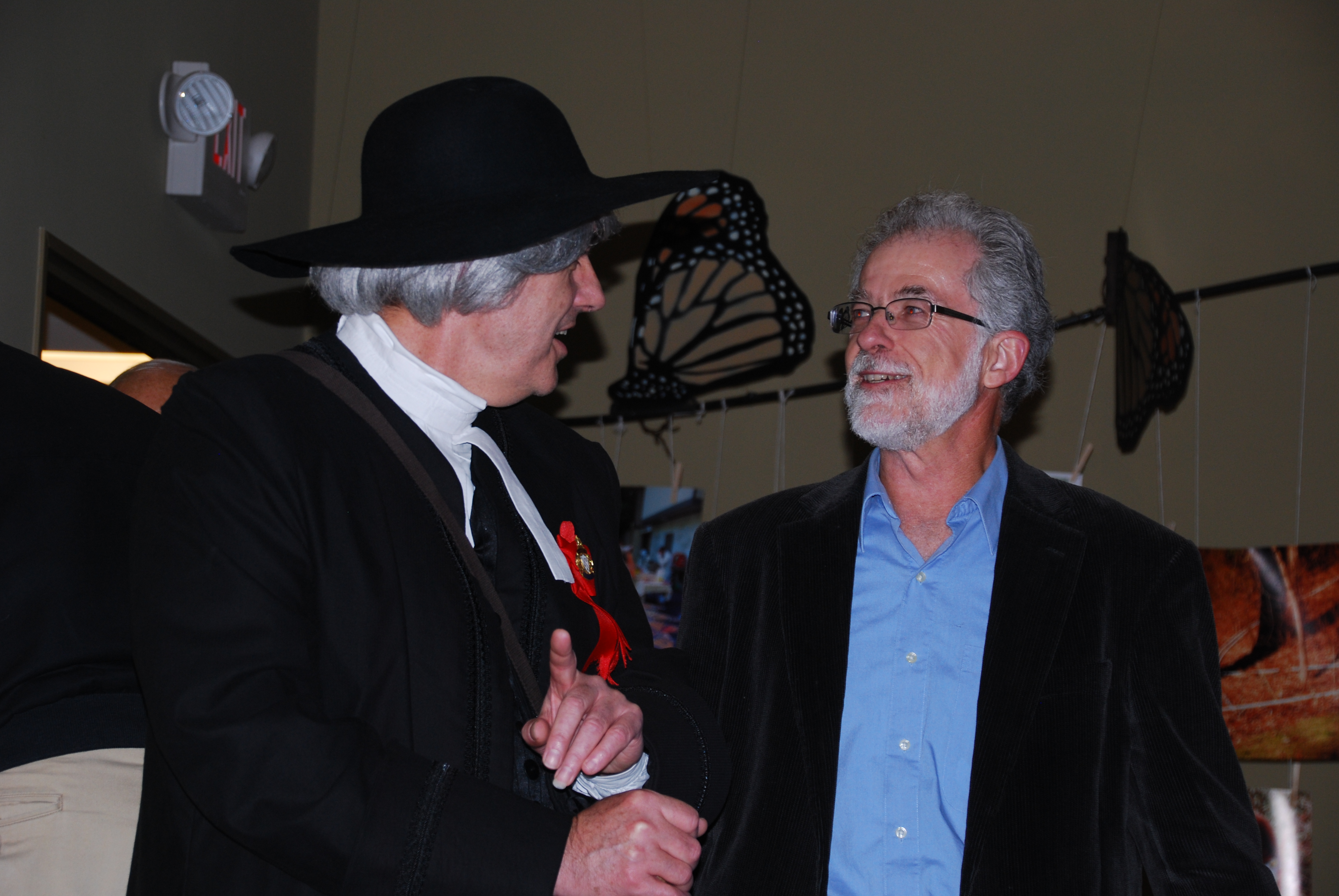
Mr. Harold Sweetman chats with John Bartram prior to his appearance at the lecture.

Mr. Harold Sweetman, the director of Jenkins Arboretum, has put a clump of these fine Lady’s Slippers at the intersection of the main trail with the lesser path to his front door.  He lives within his domain.  His is a perfectly sustainable life.  How I envy his existence. 

Envy!  That is the third of the deadly sins that I have admitted since the start of this observation.

And with that I should end to tempt God’s forbearance no longer.  I beg your forgiveness.