“Cogito ergo sum”

Philosopher

Philosopher Descartes


“I think, therefore I am”   Rene Descartes,  Principles of Philosophy, 1644


It was April 1757.  Overseers at the Darby Meeting of Friends entered a complaint against me for not believing in Christ as the Son of God.  After 13 months of discussion, I was formally disowned.

I was excommunicated for my heresy.  I was thrown out of the membership of Friends in which I had been raised.  I was 59 years old. 

I’ve spent my life passionately dedicated to the belief that God is visible in all we see.  His power is transcendent in his creation and doesn’t require the existence of a junior or a ghostly version. 
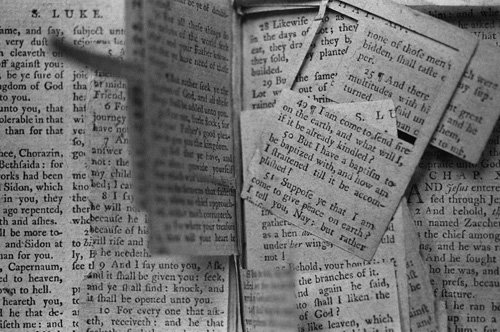
Jeffersonian Bible Clippings

I subscribe to Mr. Jefferson’s vision as eventually composited and published as “The Life and Morals of Jesus of Nazareth.”  My Friends and family took great exception.  They reached their consensus without consulting my own “Observations” 

I was too much noticed in our society.  I had a wide range of notable other friends not within the inner circle of my meeting’s powers.  My sociable ways and my outspoken views were held up against a model of orthodoxy and found severely wanting.  Independence of thought and originality of spirit was too challenging for the group seeking to preserve Penn’s Legacy.

That word—Legacy!—flew into the proceedings like an evil black-winged bird.  I was a challenge to the Legacy of our community. 

I live my life in my garden.  My garden in its entirety includes as many plants as ideas.  Corresponding as I do with some of the world’s most recognized specialists in Botany, Philosophy, Medicine, and Geology, I can respond to these smaller minds with demonstrated facts.  I am not bound by dogma and supernatural effects.  My library has several dozens books!
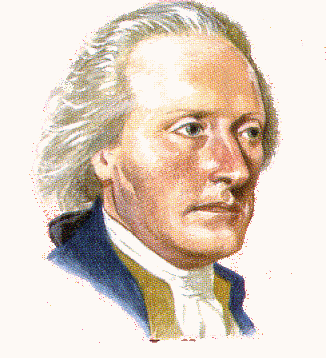
Mr. Thomas Jefferson John Bartram Friend

Mr. Thomas Jefferson from life


“I cannot live without books!”  Thomas Jefferson.


When I am out in nature, I commune with my God.  His creation has been perfectly and beautifully defined by the new system of Latin nomenclature identified by Carl Linnaeus in his Systema Naturae of 1735.  I regularly correspond with Mr. Linnaeus.  His system defines the world of plants by counting the number of stamens and pistils.  He defines God’s naturally ordered world by an exacting description of a plant’s reproductive parts.

The mere thought was anathema for certain members of my community of Friends.  The smaller the reproductive parts, the smaller the mind.

So I am left outside.  I am officially unorthodox.  I think mostly because I am reputably social and recognizably honest in observation.  I compel recognition that God is alone and to be seen in all things.  My wonderful garden is full of His botany.  Stamens, pistils, genera, species, seeds and selections are all to be understood by His science. 

I exist in the world and God has created it after his singular image.  My plants are found in His nature and live to procreate with his sufferance. 

Over these many intervening years, I have moved beyond my Friends at meeting.  The world changes on a moment to moment basis.  Nothing is immutable.  The variety of shades of green in my world doesn’t discourage me from continuing the search for new, different, unusual, better.  I am caught up in nature’s drama and can’t be concerned with the distractions of those that must define it as tragedy or comedy.

I am officially out of meeting but I am now in attendance of God’s natural world.  I worship in the wild.  I can sing now in the country and shout to the heavens without fear of retribution.  The world is GREEN and I cannot be a happier, God-fearing member of that world than I am.  Let the rest contemplate damnation.
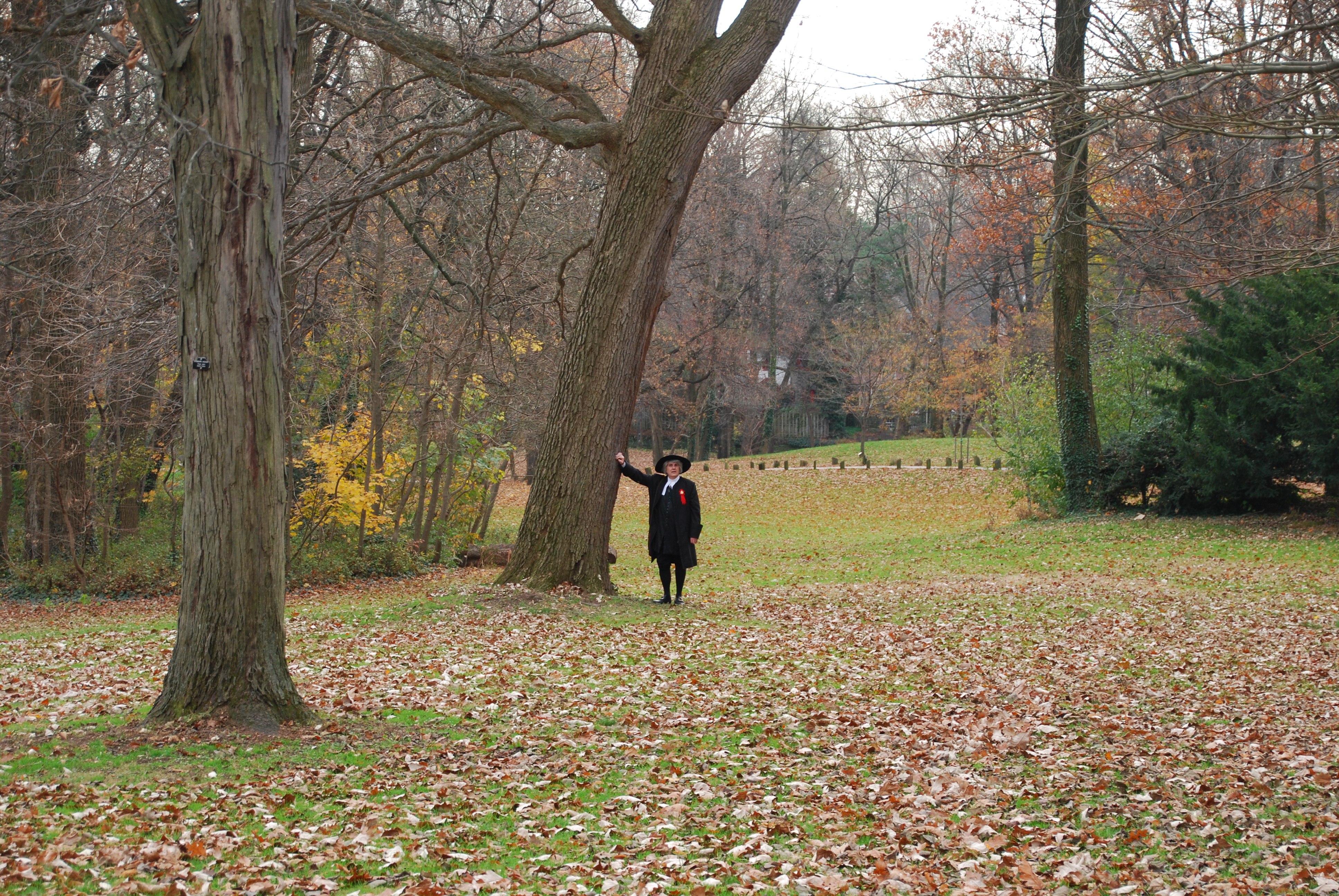
John Bartram in an English-style landscape that utilized all of the plants that he'd introduced to England.

John always finds it odd that "English-style" landscapes in this country utilize almost all of the trees that he introduced to England.

Proven Winners in Horticulture

“Those who labour in the earth are the chosen people of God.”     Thomas Jefferson

John Bartram speaks at Garden Clubs
Wayne Woods Garden Club with a demonstration of Proven Winners in the horticultural world.

I have spent my entire adult life trying to prove that the plants I collect and install will survive in the mix of climate, soil type, solar acclimatization, and wind resilience in my garden.  I want to trade in only those plants that are “Proven Winners.”  It is a delight to me to see that similar minds are there with me.  I have long believed that there is room in the horticultural marketplace for another brand other than my trade as Bartram’s Garden.

 To stamp a product with the label “Proven Winner” impresses me with a level of sincerity and transparency that I could never deliver.  It becomes a sinecure.

It was my extreme pleasure to meet with a roomful of gardeners in the area of Wayne Woods close by Valley Forge to the West of Philadelphia.  These ladies tend their gardens with the understanding that what news is gleaned is shared under the banner of a loose National Federation.  Their club presents monthly topics of horticultural enlightenment.

I was Wednesday’s topic.   I appreciate a roomful of strangers when I can be the subject of their rapt attention.  And I was certainly well attended.

You see in this photo their joy in receipt of the latest introductions from the brand name that fulfills all of my wildest expectations.  And Proven Winners prints its catalogue in full color with ring binding for ease of use.  Franklin never thought that mail-order publications would be the success they’ve become.  To say nothing about the ability to converse over the air through a combination of 1’s and 0’s.  I love technology! 

Proven Winners, Horticulture, Blooming plants, John Bartram

Attention to the latest plant releases from Proven Winners. A new season of bloom and delight.John Bartram encourages photographs.John Bartram encourages photographs.John Bartram encourages photographs.

 
Wayne Woods photographer

John Bartram encourages photographs.

“Annoso robore quercus…”

“An Oak in aged strength…” like the wooden walls of Old England was raised against the would-be conquering Spanish Armada.  The English Oak, Quercus robur, or “Hard Oak” has been conjoined with English history for so long that they wanted to claim all further discoveries of other species as just another variant of their own native tree.

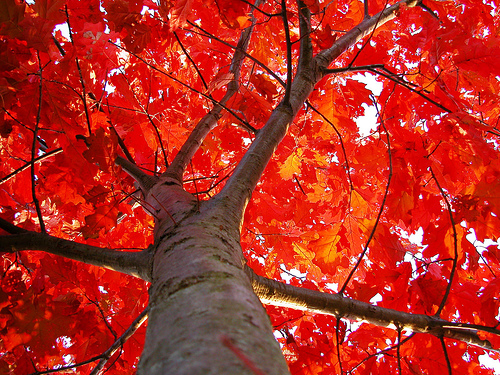
For years, my own shipments of our North American native were viewed as little more than a choice selection of England’s vaunted domestic variety.  It took confirmation from Carl Linnaeus that mine were distinctly different and entirely new introductions.  Most notably my shipments included Quercus rubra.  Red Oak.  And today, the color of England’s fall is made much more brilliant by this addition to the trade. 

Bartram Red Oak

Bartram added species variety and color to Britain's fall landscape designs

Not only Q. rubra but also Q. phellos, Q. alba, Q. velutina, and Q.heterophylla (my own hybrid between rubra and phellos) were standouts in the shipments that traveled from my garden in Philadelphia to the estates of the landed gentry in Southern England.  It was through my efforts that the British Isle was reforested after the massive logging efforts necessitated by the construction of Britain’s Imperial Fleet.

The mists and the myths of time bring many stories of the naming of this ancient genus.  The Romans first named it “Quercus” because it was through asking questions of this tree that the pantheon of pagan gods could be heard.  Our word “query” derives from the superstition that the Oak tree was a conduit through which the gods foretold the future of men.

To the even older Celts that inhabited the darker world of northern Britain and Europe, an Oak was the most sacred member of the forest.  It represented the axis mundi (center of the universe) and was given the name “Daur” from which our own word door has been taken.  The roots of this tree were literally seen as a door into the Otherworld of spirituality.  The word Druid is actually a combination of the Celtic words for oak and seeing.  A Druid was the priestly seer who knew the tree magic and stood as the guardian of the door to the Otherworld.

Today, we take such superstitions as a child understands a bedtime story:  they are notions that strike somewhere between our real hearing and sight and the mind’s eye that opens after sleep becomes dream.   My majestic Oaks are nothing of the kind.  They are iron-hard things that stand as sentinels marking the boundaries of a human age.   They are proud and ceaseless in their service to our God and His nature.  They are to be treasured and spread as thickly across this planet as it is within our power to plant.  All of them.  However many Carl can name, I can deliver.

Posting Quotes

As a former member of the Quaker meeting in Darby Pennsylvania, it would be anathema for me to consider putting a formal epitaph into words.  As a member of the Quaker family of believers, I will obey a prohibition against having a headstone mark my grave.  I choose to honor my former religious convictions.

I will not have a marker on my grave.   There will be no stone in the ground.  When I die, my presence will be between God and myself.  I will take up the subject with Him when the time is appropriate.

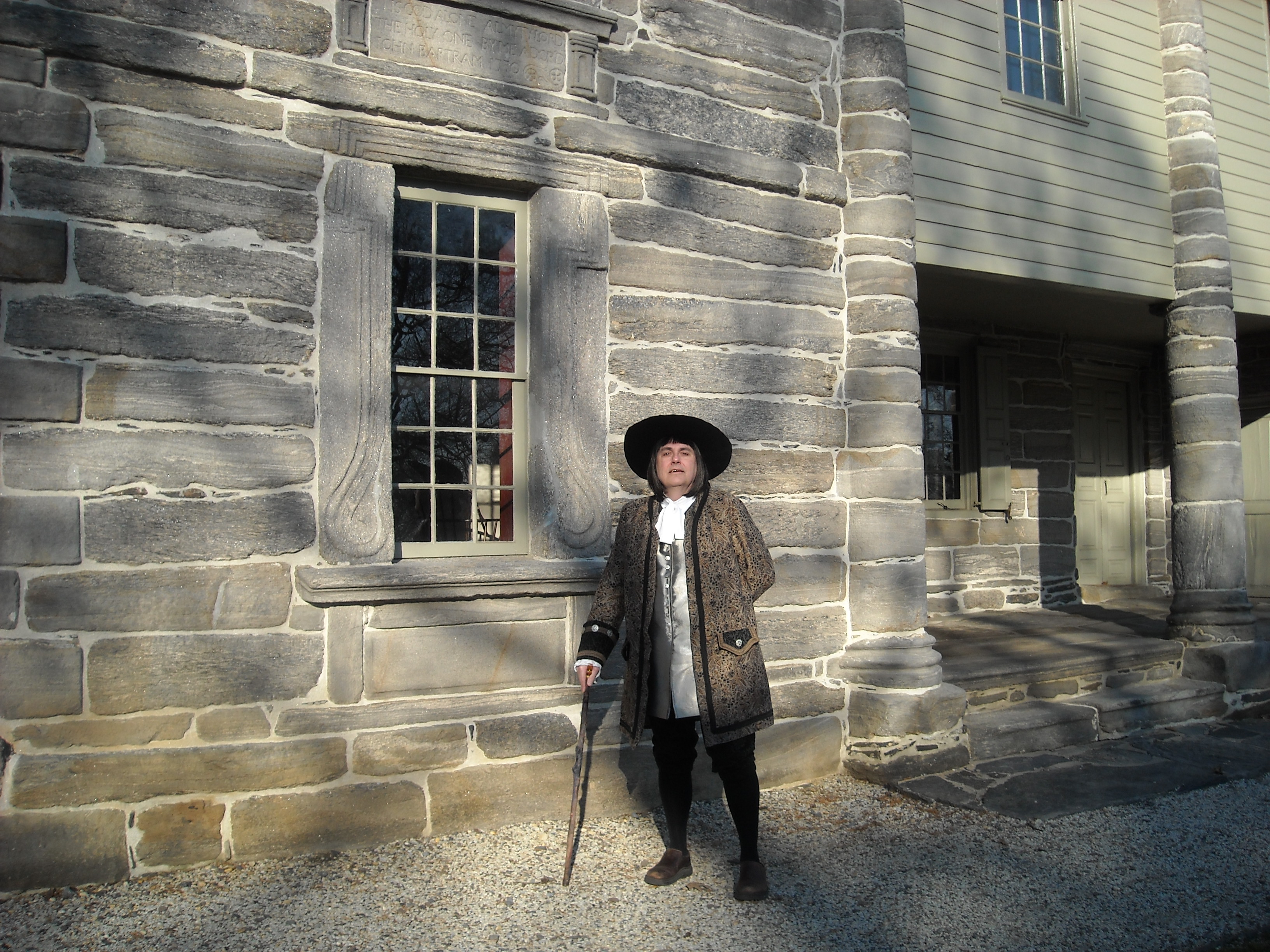
But saying that, I must still note my passing belief in that same divine being.  I believe in a singular and solitary divinity:  “It is God alone, almyty Lord, the holy One by me adored.”  If I were to have an epitaph, it would be that. 

So it was that in my 71st year I pulled out the lintel over the window that fronts my library.  It was during the summer of 1770.  And it was with those words that I focused the world’s thoughts on that spark of divinity we all share with our creator.  It is that same spark with which our maker inspired all of His creation.

In point of fact, I whole-heartedly endorse Mr. Jefferson’s publication of the New Testament.  It is a version that omits several of the more unexplained effects within the man Jesus’ ministry.

We shall speak more of the infinite as time proceeds.  There will be more of my thoughts connecting God with Man and Nature.  It is only a question of time.  And Money.

Bartram epitaph deist horticulture

Bartram carved the lintel over his library window with his epitaph

John Bartram Lives!

“If you would not be forgotten
As soon as you are dead and rotten,
Either write things worth reading,
Or do things worth the writing!”   
Benjamin Franklin

“All would live long, but none would be old.”  Benjamin Franklin

John Bartram in Bartram's Garden.

John Bartram presents a Franklinia to visitors at his Philadelphia garden


I have done worthwhile things, achieved some notoriety, seen many wonders, had experiences that challenged my being, and–most importantly–collected plants.  I will take Ben’s advice and write about them.  I will let the reader determine their value.

In my age I have been named Royal Botanist to the North American Colonies by King George.  For that honor, I am given a stipend of £50 per annum.  I am a fellow in the Royal Swedish Academy of Sciences.  I correspond with many of the finest scientific minds and botanical collectors of the age:  Dr. Carl Linnaeus, Mr. Jan Gronovius, Dr. James Fothergill, Mr. Philip Miller,  Mr. Mark Catesby, Baron Robert James Petre, and most especially Mr. Peter Collinson.

Dr. Franklin has been a part and partner of all of it.  Ben has humorous words for most of the points on which a life turns.  He’s a master.  I count him my greatest friend, most opinionated mentor, and godfather to many of my children.  His is a shadowy presence that leans over my shoulder as I write.  I can hear him:

“Pick up the pace.  Don’t be erudite.  Get to the point!”  He says this because he knows where I’m heading.  He knows it’s going to become more about him.  And it tends to becomes ALL about him in most circles of his correspondence. 

Franklinia alatamaha:  It is a unique species that takes on characteristics of the Magnolia, Stewartia and Gordonia but wraps them up in ways that are distinctive to its own magical presentation. 

People ask me all the time about it.  It has become an example of what I find, cultivate, and introduce to the international trade of botanicals.  It was named to honor Ben.  Of course!  Billy and I discovered a small copse of Franklinia on a trip of exploration up the Alatamaha River in Georgia.  That country is wildly exotic and full of the riches that would excite any confirmed natural scientist.

John Bartram the King's Gardener, Kirk R. Brown, Lecturer Horticulturist Botanist

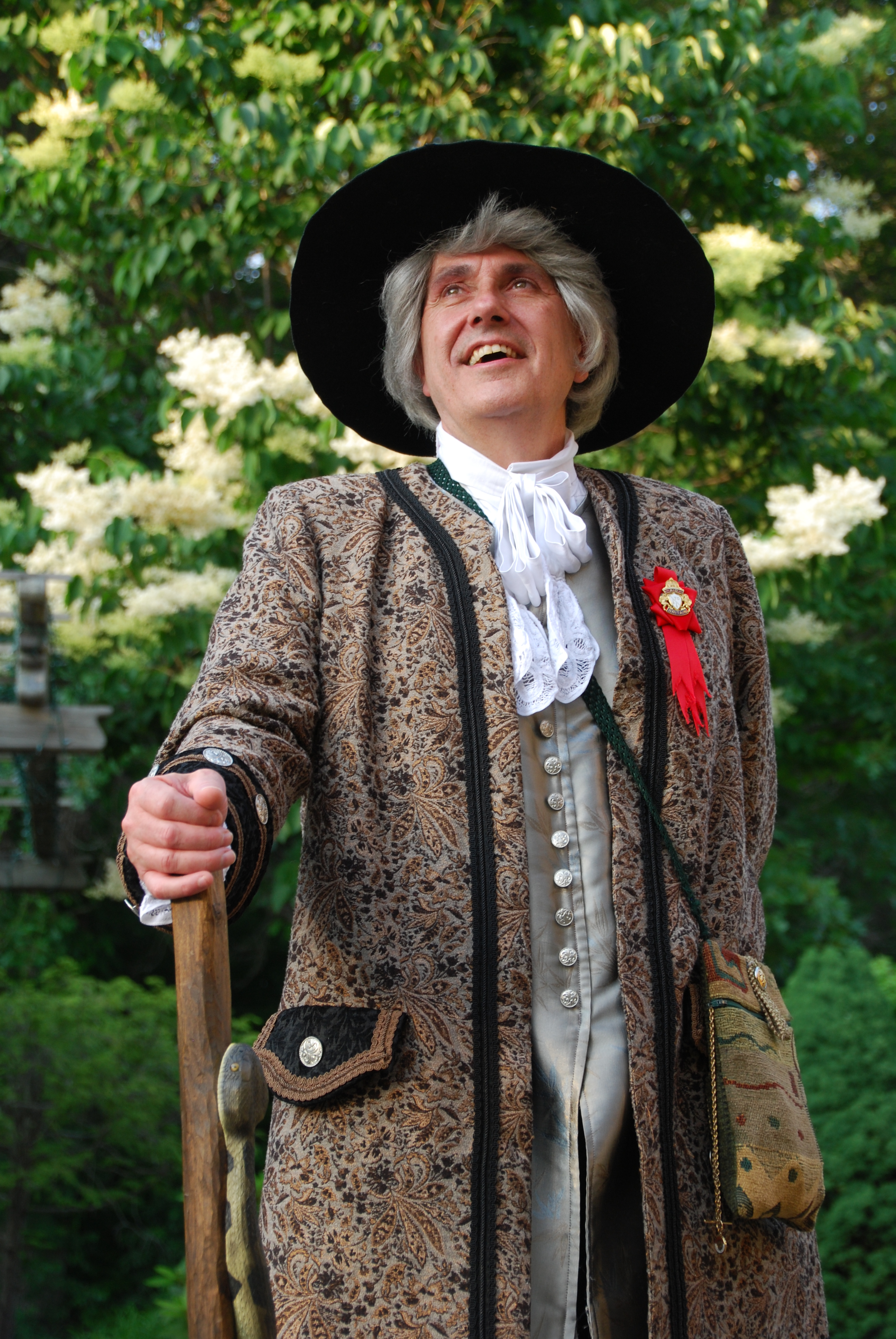
John Bartram in his natural element dressed for the trials of the road.

On this particular expedition, I was hopeful that my son, William (or Billy to the family) would catch the same passion for scientific investigation that has dogged my travels throughout adulthood.  I’m afraid that my expectations of him will never be realized even though he has been my much-considered and especially treated son.  Ann and I must wait to see how he will come out.  Anticipation–though good for the Christian soul–is very bad for the heart!

In all of the 300 years since I first saw the light of day, people have returned to my garden on the banks of the Schuylkill River to the south of the main intersection of Broad and Market Streets in the city of Philadelphia in the commonwealth granted to the Quaker, William Penn by King Charles II.  Old Billy Penn founded this colony on the notion that its citizens were entirely free to worship the God (or Gods) of their personal definition.  My father’s generation of Quakers believed fully in the independence of the will.  And that the soul is imbued with a spirit that shimmers with the spark of divinity granted by our Creator God.

Each one article of God’s creation carries the same spark.  God’s animals and minerals and vegetables contain some reflection of his fire.  Each must be preserved, conserved and protected if the whole is to succeed.  As creatures in the vastness of His wisdom and creativity, we mere human beings only deserve that which we can fully use.  We are charged to conserve the balance for the future benefit of our species.  All other demands that we place on God’s nature threaten His light in this world and ultimately the future of our species.  We must never be profligate.  We must never waste.  We must never use our earthly powers to select and destroy.

To these ends, I commit this space.  And in conclusion I will never lose sight of the fact that there is a “…wonderful order and balance that is maintained between the vegetable and animal economy…”  John Bartram, 1737

Hello world!

“The earth belongs to the living, not to the dead.”    Thomas Jefferson

JOhn Bartram Lives Kirk R. Brown

John Bartram on an adventure in Connecticut during a season when the Lilac trees were in bloom

 
It’s been 302 years since I was born.  In all of that time, people have returned to my garden on the banks of the Schuylkill River to the south of the main intersection of Broad and Market Streets in the city of Philadelphia.  They have seen what is left and have acknowledged what they know or are told about my plants or Billy’s paintings or the nursery’s introductions.  They are introduced to botanical history and horticultural wonders.  They smell the mulch in the spring or the composting leaves in the fall.  They wonder whether any of it is still vital.  Is it still important?
 
 
And I smile.  I still believe, after all of these years, that it’s vital.  It’s crucially important to our survival.  We need to remember and know that Horticulture (with a capital “H”) provides us with nourishment for body and soul.  Horticulture promises the future.  Horticulture confirms our place in the natural order.  Horticulture is our future.
 
 
And that is why John Bartram Lives.  His spirit returns triumphant.