Building a Garden For the Trees…………… Part I: Philadelphia Gardens

“The personal right to acquire property, which is a natural right, gives to property, when acquired, a right to protection, as a social right.”    James Madison
 
Philadelphia Bartram's Garden John Bartram Kirk Brown

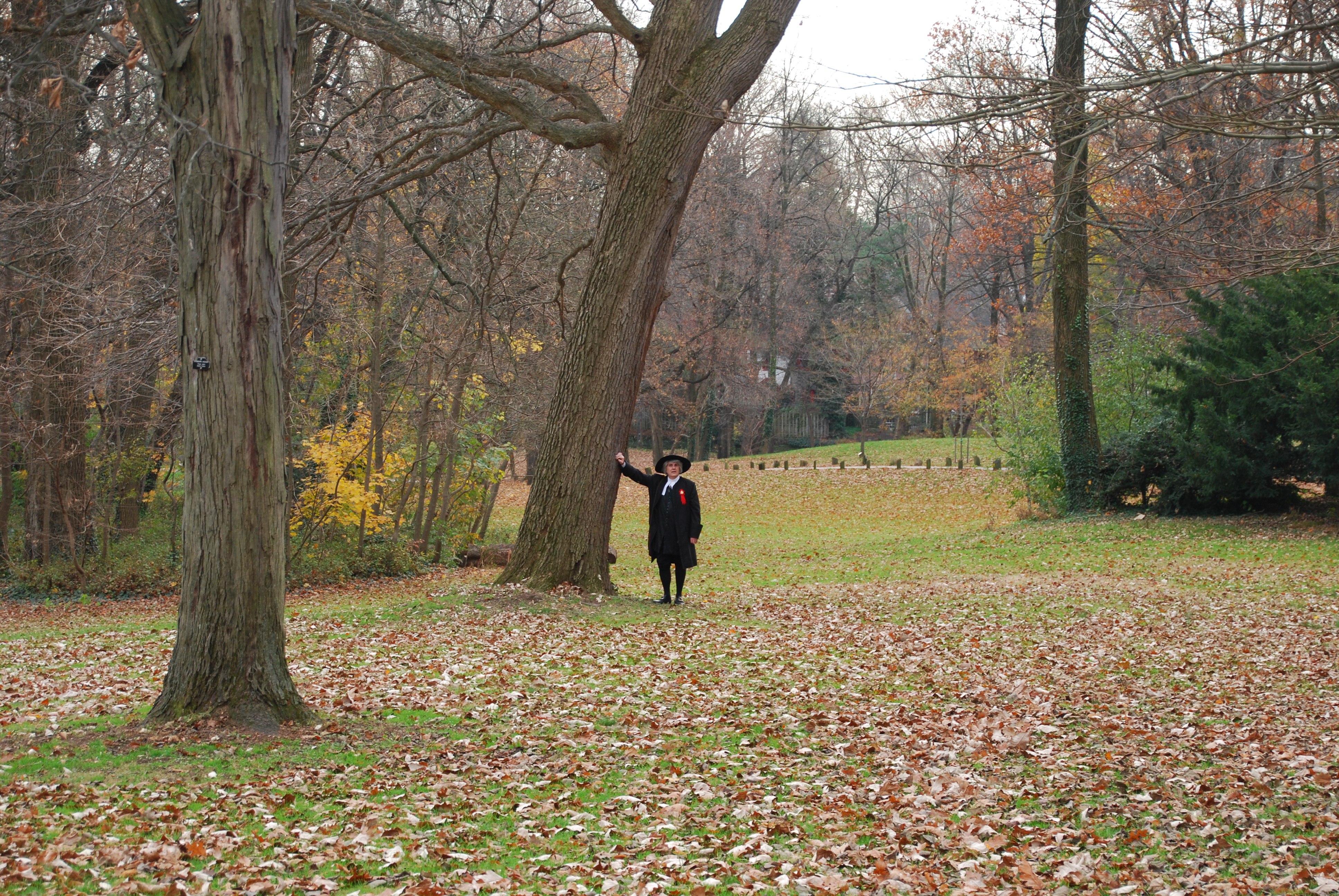
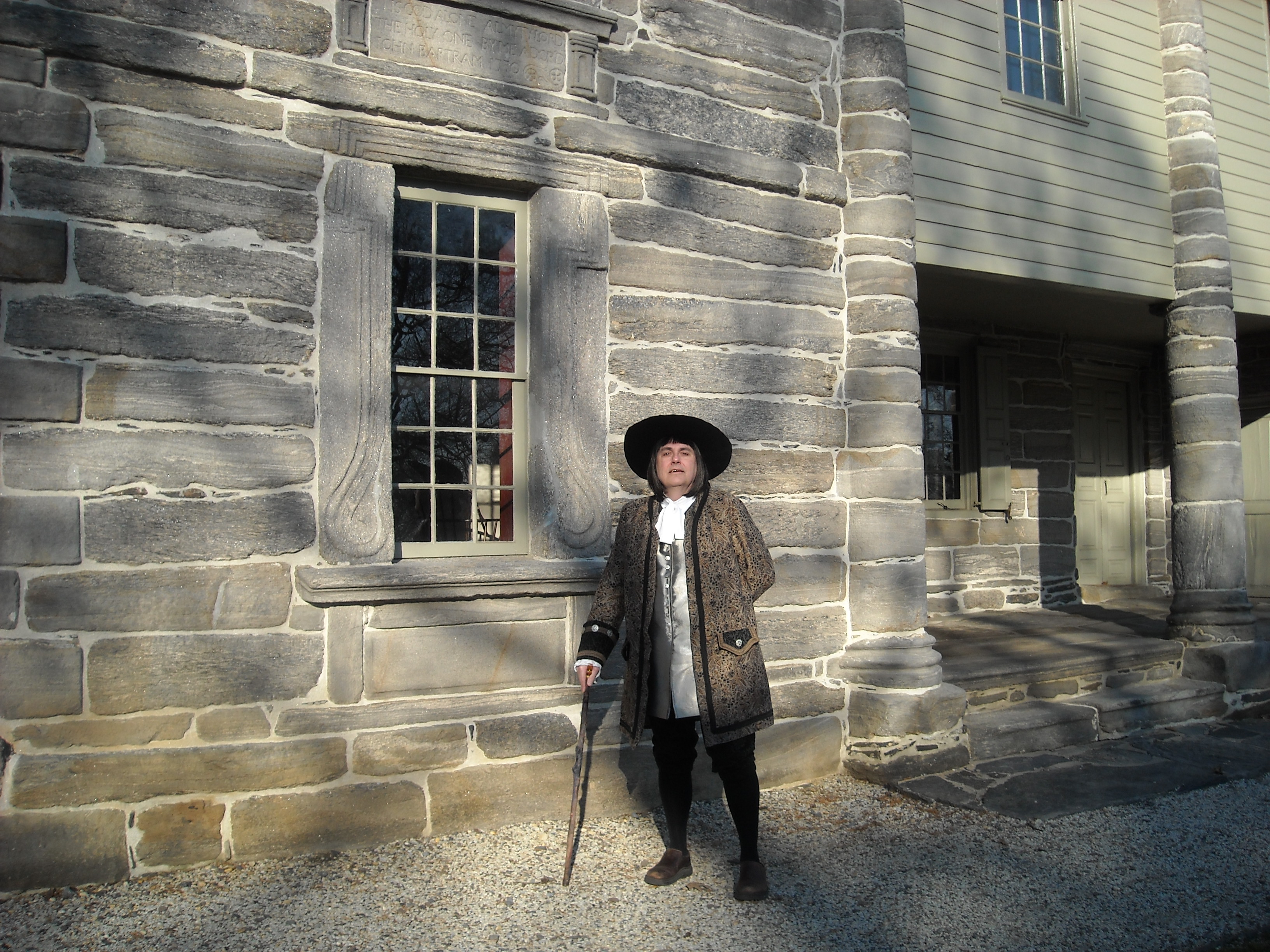
John surveys the extent of his land along the river south of Philadelphia, Pennsylvania

I have been neglectful of my posting responsibilities.  I have been too much in the public eye of late to take the time and trouble to put my pen to paper and communicate all of the wonders that I have passed in my continuing travels. 

Public display gardens in America were virtually non-existent in the days of my youth.  As you know, I was among the first to commit a large amount of acreage to the cultivation of plants for the express enjoyment of the public and testing of the growing success of varieties of species.  I owned seven hundred acres of high-quality farm land.  There was excess to use for the betterment of society through my study of Botany. 

I believe in the preservation of natural resources.  We shall develop that theme throughout the next several postings.  I was arguably the first man on record to write about the connection between the plant and animal world.  These days, the world has become smaller and our resources more challenged by encroachment from our infernal pollution.

It is up to us as individuals and corporate entities to set aside land for preservation.  We need to recognize the value horticulture adds to our life’s quality.
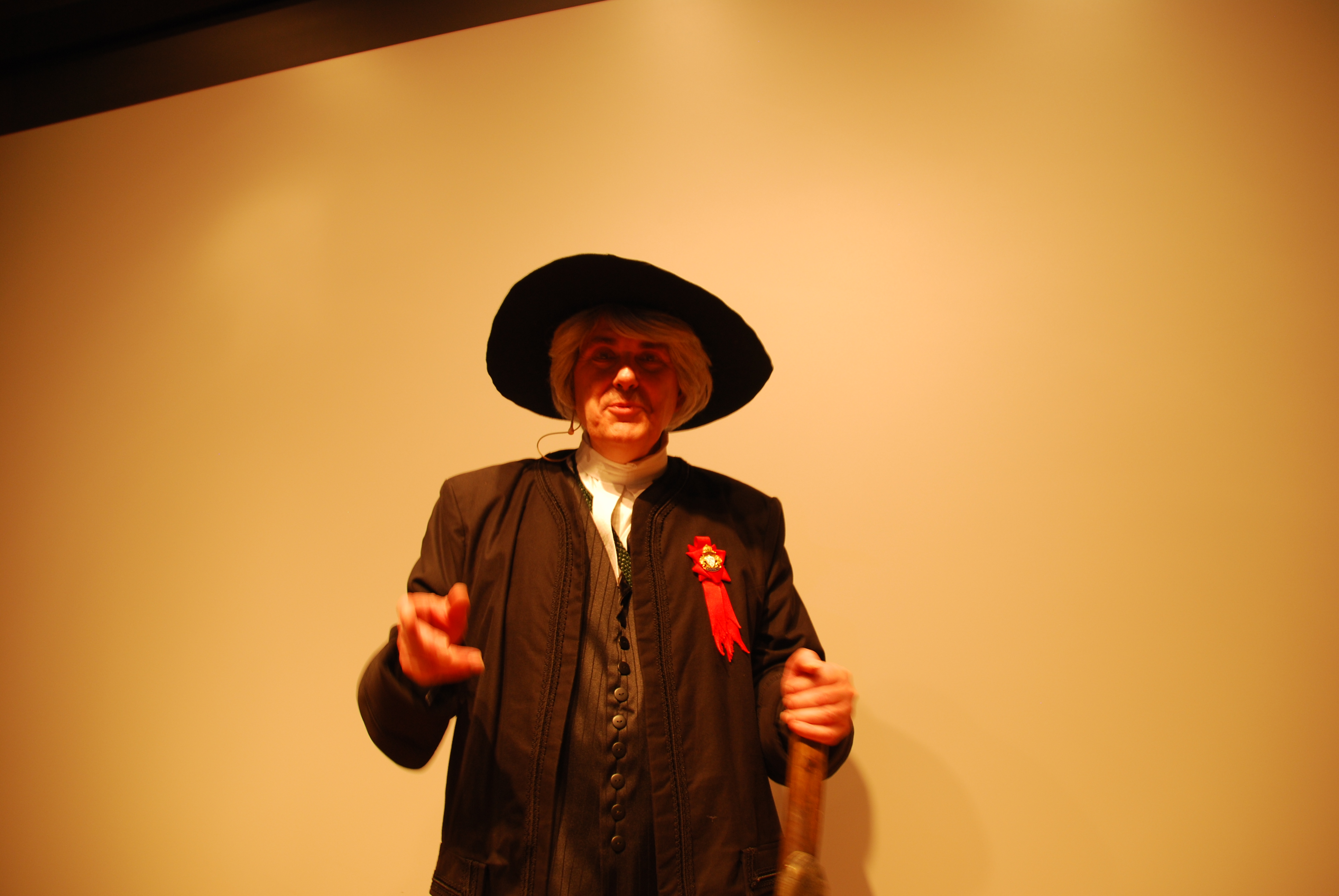
John Bartram Medford Leas Arboretum

John Bartram speaks to his audience at Medford Leas Arboretum

But these days there are many more gardens open to the public.  And Philadelphia is a haven of horticulture.  I was pleased to be invited to three collections of trees–three large assemblies of plants on preserved acreage–three arboreta–to speak about my life and times with views that I strongly hold on how the world has been developed in my absence.  From my perspective of 300 years, much has changed to challenge God’s preeminent vision for His natural scheme of things.  We have taken on a God-like mantle and would wield his mighty sword to craft our kingdom within our own child-like design.

I have visited at three public gardens, attended one large-scale conference, ate through several dinner meetings, and witnessed a gathering of Colonial Dames in New York while at the same time speaking to several hundred people over these recent days.  I acknowledge how much energy that has taken out of my aged bones.  But I continue to thrive on the enjoyment I receive from passing the news that we can have a positive impact on our environment.  We can choose to plant trees, collect nature in preserved areas, and tread more lightly on the resources that are limited by our passing.  I am encouraged by the crowd’s response!  I will post in quick order my thoughts on these visits.

Hopefully in time for the winter solstice!
The tooth is in the telling

“I am on this account not displeased that the Figure is not known as a Bald Eagle, but looks more like a Turkey. For in Truth the Turkey is in Comparison a much more respectable Bird, and withal a true original Native of America… He is besides, though a little vain & silly, a Bird of Courage, and would not hesitate to attack a Grenadier of the British Guards who should presume to invade his Farm Yard with a red Coat on.”  Benjamin Franklin, January 1784
 
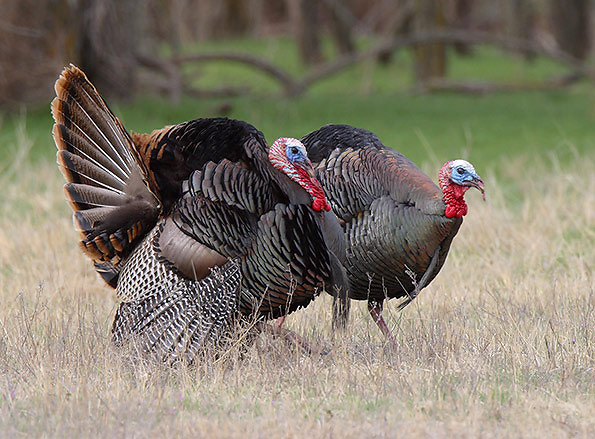
Wild Turkey on Thanksgiving

A preening turkey is an excellent symbol of this country's devotion to celebration of Thanksgiving.

Ben despised the selection of the bald eagle as the symbol of our new United Colonies.  He would be entirely in favor of any holiday that takes as its symbol this preening native of our woodland habitats.  It is Thanksgiving and this posting is delivered with all good wishes of the season.  May the day be filled with joyous reunion of family and hearty repast of the seasonal bounty. 
 
It makes me think of many dinners past that were neither hearty or healthy.  I love the opportunity that we have today to enjoy the safety and security of home with such a lofty standard of healthy environment.
 
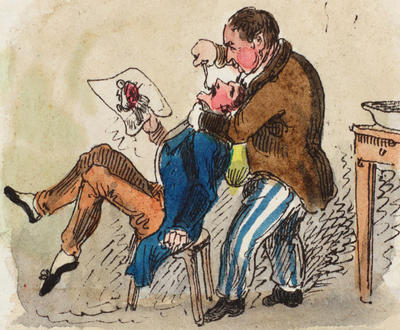
Dentistry and pain go together in 18th century society.

I have never understood why the Olde Days are thought of as goode or romantic or quiete or simple or especially happy.  I do not pine for the lack of internal domestic plumbing or external personal sanitation. 

Give me a warm bath, flush toilet, Franklin’s electricity, and most importantly:  a mechanical toothbrush with dental floss.  These modern conveniences are the most welcome addition to my Thanksgiving dinner!

Dental hygiene is the single greatest addition to quality of life that I have lived to appreciate.  In any crowd of people during the bloom of my youth, 80% would have had impaired and imperfect teeth.  You have to have lived it to appreciate the appalling visual presentation of gap-smiled, puffed-cheeked, red-gummed, and pusty-sored orifices that would have greeted you.

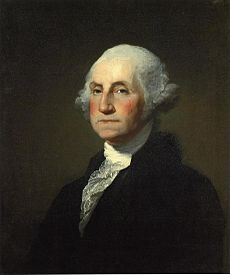
Many of you probably have heard the stories related to George Washington’s teeth.  They are all mostly rumor and innuendo.  They are tall tales manufactured of threads and half-truths.  He had several sets of dentures.  None of them were made of wood.  One of them was even sculpted of Hippopotamus ivory carved to fit the curve of his gums.  That set was manufactured by Dr. John Greenwood.

Dr. John was an artist and proud of his scientific craft.  He practiced in the nascent industry of orthodonture.  His teeth were mouths full of animal ivory, human teeth, springs, rivets, gold,  and metal rods.  Is it any wonder that none of Washington’s portraits show him smiling?  Whether he was in pain, padded with cotton wadding, upset over the mounting dental bills, or simply embarrassed, Washington never willingly showed his teeth or lack thereof.  He had only one original tooth in his entire head. 

Gilbert Stuart Portrait

George Washington is always viewed very close-mouthed. Many supposed that was because he was boring, or secretive, or prudent.

We are spoiled in this country.  I now have a personal dental hygienist.  Her name is Jenna McKenna.  She is a bonnie lass who has difficulty understanding the man she attends in the chair.  I am especially hard to hear with my mouth full of all the tools and torture devices of her trade.  She laughs to humor me when I ask questions about my confusion over subjects that would be common place for a man of this day and time.  I believe she thinks that I am funny when in point of fact I am an aberration, an eccentricity, a folly. 
 
Maintaining 300 year old teeth has become one of my prime directives.  I must care for them or risk loosing them!  Flossing has always been an issue.  We used to use dried reeds.  And toothpicks were an ever-present part of a traveling cosmetic set.  Today I struggle mightily with the additional technology of vibrating toothbrushes, fluoride additives, aisles-ful of oral washes, powders, pastes and irradiation from x-rays.    It is all very twenty-first century.
 
So when I sit down to this year’s Thanksgiving dinner, I will take it in full measure of health and well-being.  I will chew strongly and without pain.  It is a pleasure to wish that you all experience the same.
 
Happy Thanksgiving!

The line forms at the left

Even still today, people are forced to wait in anticipation of visiting the dentist in his lair. Although pain is not at the forefront of one's mind, a person would do well to care for his teeth rather than deal with the alternative.

 
How very far we’ve come.
 

Observing the political process

“When I speak of a knowing farmer, I mean one who understands the best course of crops; how to plough, to sow, to mow, to hedge, to Ditch and above all, Midas like, one who can convert everything he touches into manure, as the first transmutation towards Gold; in a word one who can bring worn out and gullied lands into good tilth in the shortest time.”     George Washington (Letter to George William Fairfax, June 30, 1785)

Washington at Mt Vernon

First and foremost, George Washington thought of himself as a farmer. He was a man after my own calling. He was a man of the earth.

Would you ever hear a politician in today’s political race actually praise the man who could turn everything he touches in a pile of dung?  Is there no humor left in the world?  Would today’s smooth and silky legal hack turn a phrase that revolved around crap that could improve the world?  Would anyone hear the difference?

It is at this time of year that everyone is focused on the news related to the changing fortunes of our nation’s politicians.  The founding fathers never realized what a shambles our now informed, egalitarian and enlightened electorate could make of the democratic selection process.

We are called upon to exercise our right and cast a ballot for the person we recognize as best qualified for the posting.  But with all of the noise and chatter about this candidate’s faults and that candidate’s peccadilloes it is impossible to separate the wheat from the chaff.

That is a farmer’s way to describe separating the good from the bad.  It occurs to me that a large percentage of the original Congress were farmers.  They would have understood such things as preservation of seed corn, rotation of crops, nourishment and replenishment of the soils.  They also would have understood that war was bad for stability in the marketplace and that it dramatically reduces the efficiency of the harvest.

“That government is best which governs least, because its people discipline themselves. If we are directed from Washington when to sow and when to reap, we will soon want for bread.”  

Thomas Jefferson:  Autobiography 1821

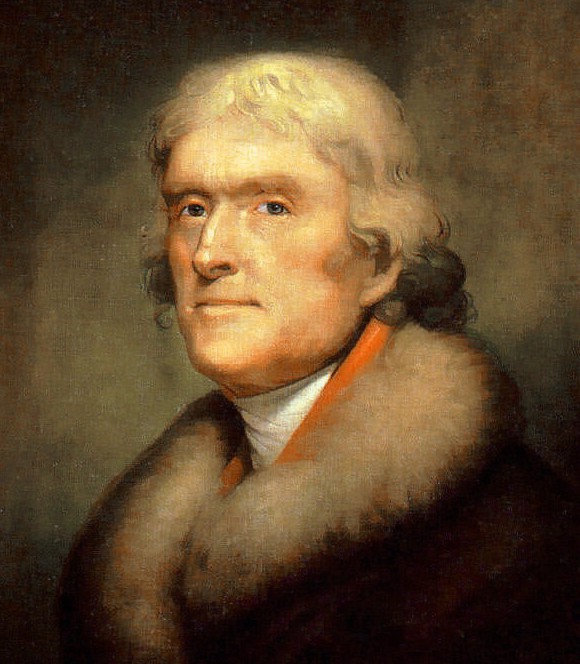
Thomas Jefferson, Gentleman Farmer

T. Jefferson made many connections between farming his land and running the American confederation of states. It was largely to him that we owe today's concept of political parties.

At this moment, in this country, there are many who want for bread.  They want for honest employment.  They want for security and a sense of place in the world.

I always hesitate to quote Thomas Jefferson because of my ambivalence to his style of living and mode of paying his life forward.  In life, he was a wastrel.  In his presidency he was profligate.  He purchased Louisiana–effectively doubling the size of these united states!  What an egoist!

He was, in short, the perfect politician.  

But he was also a farmer.  He trialed a vast selection of new plant materials.  He developed a model of kitchen gardening that is still the envy of designers and food producers yet today.  He knew the value of composting.  He understood that the planting of tobacco was a crime against nature.  He husbanded the earth in a most responsible and respectable way.

As far as a connection is to be made between governance and agriculture, Benjamin Franklin described it best.  His thoughts always strike me with their sense and practicality.  His is generally the shortest distance between the problem and profitability.

“Finally, there seem to be but three Ways for a Nation to acquire Wealth. The first is by War as the Romans did in plundering their conquered Neighbours.  This is Robbery.  The second by Commerce which is generally Cheating.  The third by Agriculture the only honest Way; wherein Man receives a real Increase of the Seed thrown into the Ground, in a kind of continual Miracle wrought by the Hand of God in his favour, as a Reward for his innocent Life, and virtuous Industry.”  

Benjamin Franklin:  Positions To Be Examined, April 4, 1769

Benjamin Franklin at thought

Benjamin Franklin imagines himself the most sagacious of the founding fathers.

With the election results hanging in the balance on this most electoral of nights, Franklin would be found sitting in a tavern welcoming the world with toasts and treatises.  He would pontificate about the state of the world.  He would argue and lecture and laugh.  We don’t laugh enough–at ourselves and at what we’ve made of our curses and causes.

Franklin wouldn’t shy from confronting the big issues that swirl around our notion of propriety.  He would comment on our lack of sobriety.  He would eschew our morality. But he would also confound us with the easy solution to our many perceived difficulties.  Get over and get on.  Move through and pass by.  Be aware and conscious of the threats but strive for improvement.

It was never easy to lead a profitable life.  It was never a foregone conclusion that we would be successful.  But we were and are.

 So it will continue.  If we work towards that commonality:  Agriculture.  Dirt under the fingernails.  Sweat on the brow.  Ownership and responsibility.  We tillers and toilers of the earth will one day be recognized for the strength that we possess.  


Watersheds and Turning Leaves

“Fall is the best time to sow the native seeds…spring may do but many miss comeing up that year!”  John Bartram to his son William, 1761
 
There are moments in life when a backward view shows how momentous change was wrought with an easy nod or a spirited statement. 
 
Stephanie Cohen's Garden Posting

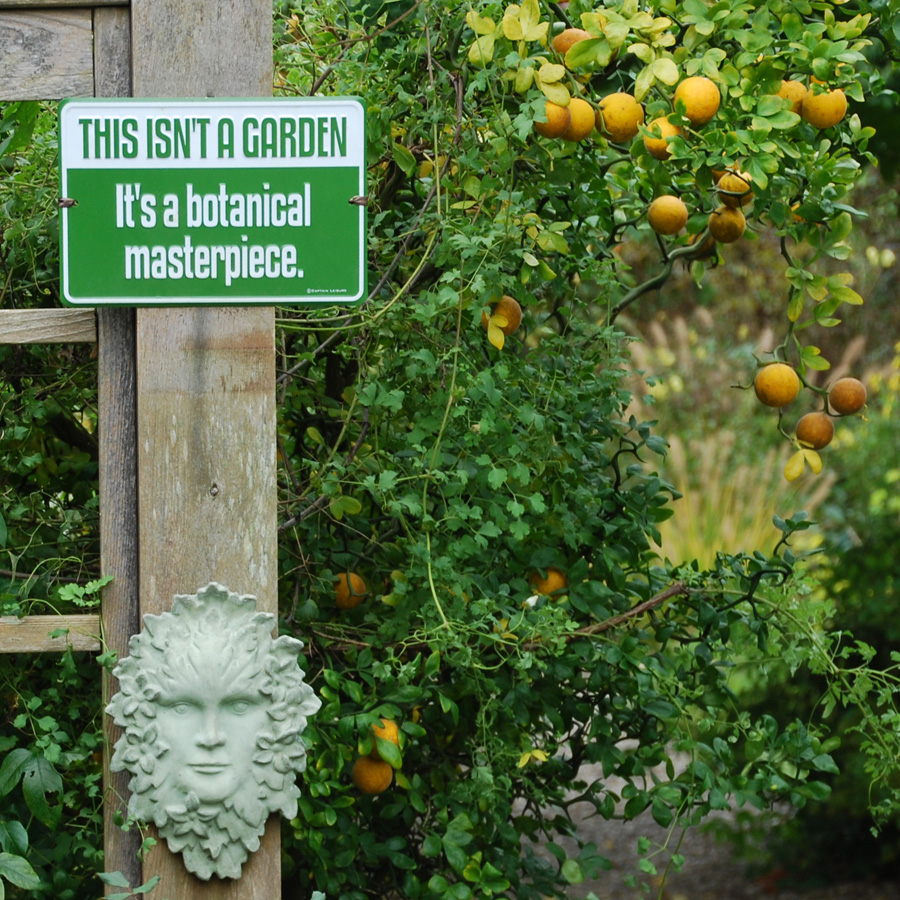
We have images in our mind's eye that make our personal and private garden a masterpiece. Whether the fact matches the dream is left to the definition of those friends that we allow to visit.

Moving into this particular autumn, I reflect on many of these moments in my life and recognize how turning leaves and watersheds are so symbolic of my own travels, trails and trials.

 
Bartram’s Garden is a masterpiece whether the world notes it or not.  It is my dream and conception of it that is perfect.  Execution be damned.
 
I am blessed with a good wife, responsible children, and many goodly friends.  I owe my present condition to them.   Without them, I wouldn’t anticipate the future with such unrestrained enthusiasm and optimism. 
 
I am here because of the urging of one friend in particular.  It is she who first crafted the dream that cracked the butterfly’s chrysalis.  I dined with her recently. 
  
Stephanie Cohen runs an open garden

Stephanie Cohen's open door policy extends to her house, garden and life. She welcomes one and all to her bountiful brand of wisdom, wit and verve.

Stephanie Cohen is operatic in her perennial overtures.  She is constantly connecting and dispensing.  She is welcoming, warming, and wonderfully quixotic with humor and happening.  In all of our recent conversations, she urges us all to, “pay it forward!”  And I love her the more for it.  She reminds me to live in my own world and let others join or follow.  The example I set or the passion I feel will only be positive if it’s shared.  My door should be open to all possibilities. 

 
I am standing here in my autumn to pay it forward.  There have been many others like Stephanie throughout my life that allow me to view the world from a high vantage point.  My correspondence and my conversations with the learned and the notorious have prospered my business. 


This education has come to me for the asking.  The generosity of the true professionals has always astounded me in its honesty and selflessness.  The goodness in this green industry can be found like running water in nature.

 
Which brings me to how my life in this particular autumn is one rich watershed.   

W. Scott Douglas

W. Scott Douglas, President Cook's Creek Watershed Association

Plentiful water resources grace North America.  We must take responsibility for protecting them with what we put on or in the soils through which that water moves.  Cook’s Creek is an area of roughly 30 square miles in Bucks County, north of Philadelphia.  It is closest to the Richland Friends Meeting founded in 1723. 

 
The meeting waits on John Bartram's message
Cook’s Creek Watershed Association
I had the marvelous opportunity to discuss my views of the importance of preserving our natural resources with the Cook’s Creek Watershed Association.  They are a long-established group to be so closely defined on such a specific subject in such a small geographic area.  They are to be treasured.  It comforts me that even at my advanced years, I can still be surprised by the political causes that others choose to embrace.  This topic is one that should electrify the world.  It needs to energize and empower.  We need 1,000 more Cook’s Creek Watershed Associations in order to produce a meaningful effect. 
 
Our lives need to encourage the nature around us not endanger it.  This watershed association connection needs to become an episode in my public discourse:  a watershed call to action.
 
In this autumn, I need to “pay it forward.”  This can be my watershed autumn of turning a new leaf. 

“Cogito ergo sum”

Philosopher

Philosopher Descartes


“I think, therefore I am”   Rene Descartes,  Principles of Philosophy, 1644


It was April 1757.  Overseers at the Darby Meeting of Friends entered a complaint against me for not believing in Christ as the Son of God.  After 13 months of discussion, I was formally disowned.

I was excommunicated for my heresy.  I was thrown out of the membership of Friends in which I had been raised.  I was 59 years old. 

I’ve spent my life passionately dedicated to the belief that God is visible in all we see.  His power is transcendent in his creation and doesn’t require the existence of a junior or a ghostly version. 

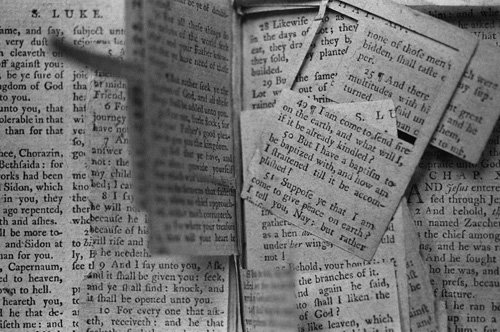
Jeffersonian Bible Clippings

I subscribe to Mr. Jefferson’s vision as eventually composited and published as “The Life and Morals of Jesus of Nazareth.”  My Friends and family took great exception.  They reached their consensus without consulting my own “Observations” 

I was too much noticed in our society.  I had a wide range of notable other friends not within the inner circle of my meeting’s powers.  My sociable ways and my outspoken views were held up against a model of orthodoxy and found severely wanting.  Independence of thought and originality of spirit was too challenging for the group seeking to preserve Penn’s Legacy.

That word—Legacy!—flew into the proceedings like an evil black-winged bird.  I was a challenge to the Legacy of our community. 

I live my life in my garden.  My garden in its entirety includes as many plants as ideas.  Corresponding as I do with some of the world’s most recognized specialists in Botany, Philosophy, Medicine, and Geology, I can respond to these smaller minds with demonstrated facts.  I am not bound by dogma and supernatural effects.  My library has several dozens books!

Mr. Thomas Jefferson John Bartram Friend

Mr. Thomas Jefferson from life


“I cannot live without books!”  Thomas Jefferson.


When I am out in nature, I commune with my God.  His creation has been perfectly and beautifully defined by the new system of Latin nomenclature identified by Carl Linnaeus in his Systema Naturae of 1735.  I regularly correspond with Mr. Linnaeus.  His system defines the world of plants by counting the number of stamens and pistils.  He defines God’s naturally ordered world by an exacting description of a plant’s reproductive parts.

The mere thought was anathema for certain members of my community of Friends.  The smaller the reproductive parts, the smaller the mind.

So I am left outside.  I am officially unorthodox.  I think mostly because I am reputably social and recognizably honest in observation.  I compel recognition that God is alone and to be seen in all things.  My wonderful garden is full of His botany.  Stamens, pistils, genera, species, seeds and selections are all to be understood by His science. 

I exist in the world and God has created it after his singular image.  My plants are found in His nature and live to procreate with his sufferance. 

Over these many intervening years, I have moved beyond my Friends at meeting.  The world changes on a moment to moment basis.  Nothing is immutable.  The variety of shades of green in my world doesn’t discourage me from continuing the search for new, different, unusual, better.  I am caught up in nature’s drama and can’t be concerned with the distractions of those that must define it as tragedy or comedy.

I am officially out of meeting but I am now in attendance of God’s natural world.  I worship in the wild.  I can sing now in the country and shout to the heavens without fear of retribution.  The world is GREEN and I cannot be a happier, God-fearing member of that world than I am.  Let the rest contemplate damnation.

John Bartram in an English-style landscape that utilized all of the plants that he'd introduced to England.

John always finds it odd that "English-style" landscapes in this country utilize almost all of the trees that he introduced to England.

Proven Winners in Horticulture

“Those who labour in the earth are the chosen people of God.”     Thomas Jefferson

John Bartram speaks at Garden Clubs
Wayne Woods Garden Club with a demonstration of Proven Winners in the horticultural world.

I have spent my entire adult life trying to prove that the plants I collect and install will survive in the mix of climate, soil type, solar acclimatization, and wind resilience in my garden.  I want to trade in only those plants that are “Proven Winners.”  It is a delight to me to see that similar minds are there with me.  I have long believed that there is room in the horticultural marketplace for another brand other than my trade as Bartram’s Garden.

 To stamp a product with the label “Proven Winner” impresses me with a level of sincerity and transparency that I could never deliver.  It becomes a sinecure.

It was my extreme pleasure to meet with a roomful of gardeners in the area of Wayne Woods close by Valley Forge to the West of Philadelphia.  These ladies tend their gardens with the understanding that what news is gleaned is shared under the banner of a loose National Federation.  Their club presents monthly topics of horticultural enlightenment.

I was Wednesday’s topic.   I appreciate a roomful of strangers when I can be the subject of their rapt attention.  And I was certainly well attended.

You see in this photo their joy in receipt of the latest introductions from the brand name that fulfills all of my wildest expectations.  And Proven Winners prints its catalogue in full color with ring binding for ease of use.  Franklin never thought that mail-order publications would be the success they’ve become.  To say nothing about the ability to converse over the air through a combination of 1’s and 0’s.  I love technology! 

Proven Winners, Horticulture, Blooming plants, John Bartram

Attention to the latest plant releases from Proven Winners. A new season of bloom and delight.John Bartram encourages photographs.John Bartram encourages photographs.John Bartram encourages photographs.

 
Wayne Woods photographer

John Bartram encourages photographs.

“Annoso robore quercus…”

“An Oak in aged strength…” like the wooden walls of Old England was raised against the would-be conquering Spanish Armada.  The English Oak, Quercus robur, or “Hard Oak” has been conjoined with English history for so long that they wanted to claim all further discoveries of other species as just another variant of their own native tree.

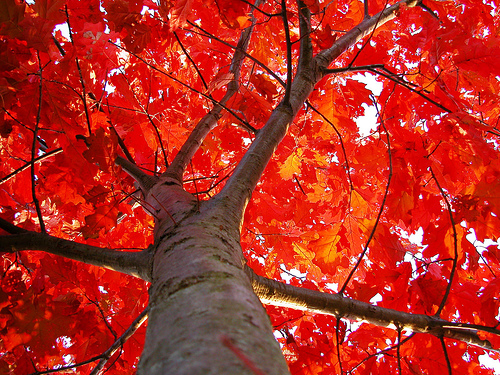
For years, my own shipments of our North American native were viewed as little more than a choice selection of England’s vaunted domestic variety.  It took confirmation from Carl Linnaeus that mine were distinctly different and entirely new introductions.  Most notably my shipments included Quercus rubra.  Red Oak.  And today, the color of England’s fall is made much more brilliant by this addition to the trade. 

Bartram Red Oak

Bartram added species variety and color to Britain's fall landscape designs

Not only Q. rubra but also Q. phellos, Q. alba, Q. velutina, and Q.heterophylla (my own hybrid between rubra and phellos) were standouts in the shipments that traveled from my garden in Philadelphia to the estates of the landed gentry in Southern England.  It was through my efforts that the British Isle was reforested after the massive logging efforts necessitated by the construction of Britain’s Imperial Fleet.

The mists and the myths of time bring many stories of the naming of this ancient genus.  The Romans first named it “Quercus” because it was through asking questions of this tree that the pantheon of pagan gods could be heard.  Our word “query” derives from the superstition that the Oak tree was a conduit through which the gods foretold the future of men.

To the even older Celts that inhabited the darker world of northern Britain and Europe, an Oak was the most sacred member of the forest.  It represented the axis mundi (center of the universe) and was given the name “Daur” from which our own word door has been taken.  The roots of this tree were literally seen as a door into the Otherworld of spirituality.  The word Druid is actually a combination of the Celtic words for oak and seeing.  A Druid was the priestly seer who knew the tree magic and stood as the guardian of the door to the Otherworld.

Today, we take such superstitions as a child understands a bedtime story:  they are notions that strike somewhere between our real hearing and sight and the mind’s eye that opens after sleep becomes dream.   My majestic Oaks are nothing of the kind.  They are iron-hard things that stand as sentinels marking the boundaries of a human age.   They are proud and ceaseless in their service to our God and His nature.  They are to be treasured and spread as thickly across this planet as it is within our power to plant.  All of them.  However many Carl can name, I can deliver.

Posting Quotes

As a former member of the Quaker meeting in Darby Pennsylvania, it would be anathema for me to consider putting a formal epitaph into words.  As a member of the Quaker family of believers, I will obey a prohibition against having a headstone mark my grave.  I choose to honor my former religious convictions.

I will not have a marker on my grave.   There will be no stone in the ground.  When I die, my presence will be between God and myself.  I will take up the subject with Him when the time is appropriate.

But saying that, I must still note my passing belief in that same divine being.  I believe in a singular and solitary divinity:  “It is God alone, almyty Lord, the holy One by me adored.”  If I were to have an epitaph, it would be that. 

So it was that in my 71st year I pulled out the lintel over the window that fronts my library.  It was during the summer of 1770.  And it was with those words that I focused the world’s thoughts on that spark of divinity we all share with our creator.  It is that same spark with which our maker inspired all of His creation.

In point of fact, I whole-heartedly endorse Mr. Jefferson’s publication of the New Testament.  It is a version that omits several of the more unexplained effects within the man Jesus’ ministry.

We shall speak more of the infinite as time proceeds.  There will be more of my thoughts connecting God with Man and Nature.  It is only a question of time.  And Money.

Bartram epitaph deist horticulture

Bartram carved the lintel over his library window with his epitaph

John Bartram Lives!

“If you would not be forgotten
As soon as you are dead and rotten,
Either write things worth reading,
Or do things worth the writing!”   
Benjamin Franklin

“All would live long, but none would be old.”  Benjamin Franklin

John Bartram in Bartram's Garden.

John Bartram presents a Franklinia to visitors at his Philadelphia garden


I have done worthwhile things, achieved some notoriety, seen many wonders, had experiences that challenged my being, and–most importantly–collected plants.  I will take Ben’s advice and write about them.  I will let the reader determine their value.

In my age I have been named Royal Botanist to the North American Colonies by King George.  For that honor, I am given a stipend of £50 per annum.  I am a fellow in the Royal Swedish Academy of Sciences.  I correspond with many of the finest scientific minds and botanical collectors of the age:  Dr. Carl Linnaeus, Mr. Jan Gronovius, Dr. James Fothergill, Mr. Philip Miller,  Mr. Mark Catesby, Baron Robert James Petre, and most especially Mr. Peter Collinson.

Dr. Franklin has been a part and partner of all of it.  Ben has humorous words for most of the points on which a life turns.  He’s a master.  I count him my greatest friend, most opinionated mentor, and godfather to many of my children.  His is a shadowy presence that leans over my shoulder as I write.  I can hear him:

“Pick up the pace.  Don’t be erudite.  Get to the point!”  He says this because he knows where I’m heading.  He knows it’s going to become more about him.  And it tends to becomes ALL about him in most circles of his correspondence. 

Franklinia alatamaha:  It is a unique species that takes on characteristics of the Magnolia, Stewartia and Gordonia but wraps them up in ways that are distinctive to its own magical presentation. 

People ask me all the time about it.  It has become an example of what I find, cultivate, and introduce to the international trade of botanicals.  It was named to honor Ben.  Of course!  Billy and I discovered a small copse of Franklinia on a trip of exploration up the Alatamaha River in Georgia.  That country is wildly exotic and full of the riches that would excite any confirmed natural scientist.

John Bartram the King's Gardener, Kirk R. Brown, Lecturer Horticulturist Botanist

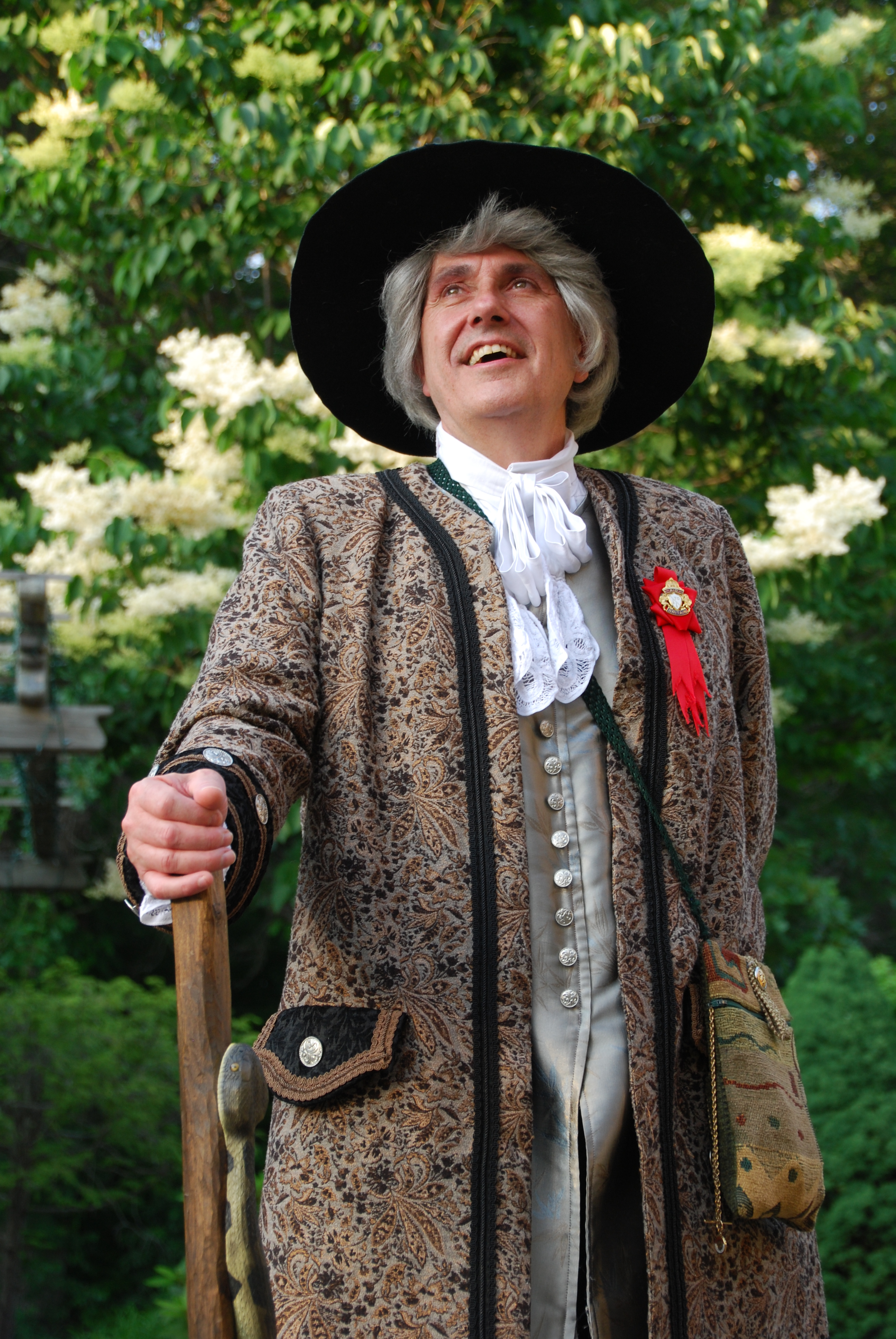
John Bartram in his natural element dressed for the trials of the road.

On this particular expedition, I was hopeful that my son, William (or Billy to the family) would catch the same passion for scientific investigation that has dogged my travels throughout adulthood.  I’m afraid that my expectations of him will never be realized even though he has been my much-considered and especially treated son.  Ann and I must wait to see how he will come out.  Anticipation–though good for the Christian soul–is very bad for the heart!

In all of the 300 years since I first saw the light of day, people have returned to my garden on the banks of the Schuylkill River to the south of the main intersection of Broad and Market Streets in the city of Philadelphia in the commonwealth granted to the Quaker, William Penn by King Charles II.  Old Billy Penn founded this colony on the notion that its citizens were entirely free to worship the God (or Gods) of their personal definition.  My father’s generation of Quakers believed fully in the independence of the will.  And that the soul is imbued with a spirit that shimmers with the spark of divinity granted by our Creator God.

Each one article of God’s creation carries the same spark.  God’s animals and minerals and vegetables contain some reflection of his fire.  Each must be preserved, conserved and protected if the whole is to succeed.  As creatures in the vastness of His wisdom and creativity, we mere human beings only deserve that which we can fully use.  We are charged to conserve the balance for the future benefit of our species.  All other demands that we place on God’s nature threaten His light in this world and ultimately the future of our species.  We must never be profligate.  We must never waste.  We must never use our earthly powers to select and destroy.

To these ends, I commit this space.  And in conclusion I will never lose sight of the fact that there is a “…wonderful order and balance that is maintained between the vegetable and animal economy…”  John Bartram, 1737

Hello world!

“The earth belongs to the living, not to the dead.”    Thomas Jefferson

JOhn Bartram Lives Kirk R. Brown

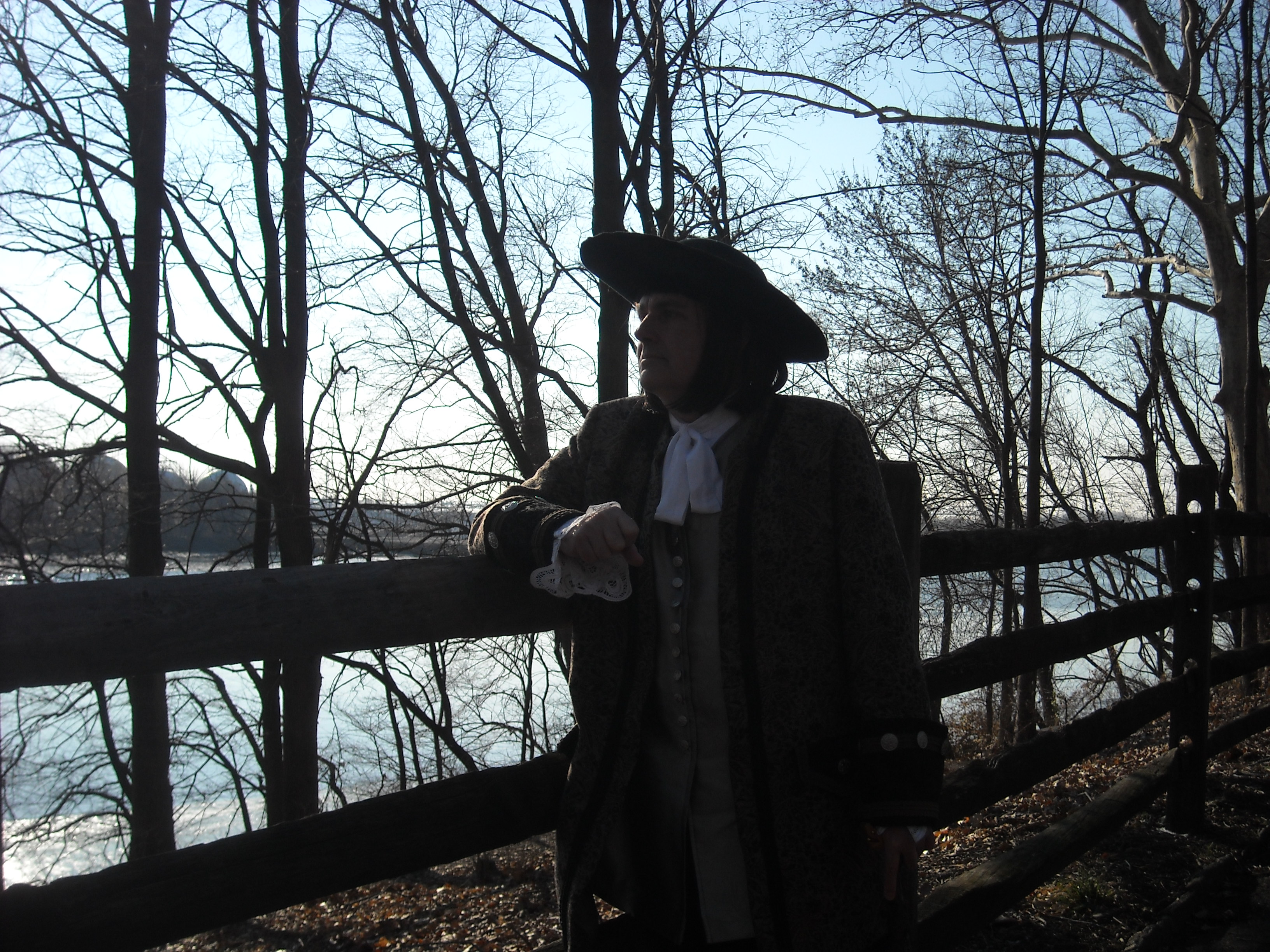
John Bartram on an adventure in Connecticut during a season when the Lilac trees were in bloom

 
It’s been 302 years since I was born.  In all of that time, people have returned to my garden on the banks of the Schuylkill River to the south of the main intersection of Broad and Market Streets in the city of Philadelphia.  They have seen what is left and have acknowledged what they know or are told about my plants or Billy’s paintings or the nursery’s introductions.  They are introduced to botanical history and horticultural wonders.  They smell the mulch in the spring or the composting leaves in the fall.  They wonder whether any of it is still vital.  Is it still important?
 
 
And I smile.  I still believe, after all of these years, that it’s vital.  It’s crucially important to our survival.  We need to remember and know that Horticulture (with a capital “H”) provides us with nourishment for body and soul.  Horticulture promises the future.  Horticulture confirms our place in the natural order.  Horticulture is our future.
 
 
And that is why John Bartram Lives.  His spirit returns triumphant.